ADAMSKI, ROSWELL AND SOCORRO

ADAMSKI, ROSWELL & SOCORRO:

The Hoaxers and the Hoaxed.

 David Calvert

Whether committed as a practical joke or serious fraud, hoaxing has been with us from the earliest times and nothing is sacred to its perpetrators. Great works of art, religious relics, literary works, and so on, have all come under the acquisitive gaze of the fraudster. In most instances they are  motivated by  financial gain, but in these more media-based times notoriety has become the by-word for such acts of wanton deception and the world of ufology has attracted more than its fair share of con artists.

From the birth of the modern UFO era in 1947, with the Kenneth Arnold sighting, a new breed of confidence tricksters emerged. They were to bring disrepute upon the then fledgling study of UFOs and undoubtedly delayed the serious scientific study of the phenomena with their, at times, outlandish claims.

George Adamski [1891-1965]

Adamski is perhaps the most famous individual to emerge from the contactee period. In November 1952 he claimed to have made contact with a UFO pilot from Venus. This claim has since been totally discredited, not least because we now know that Venus isadamski interview an inhospitable planet that cannot possibly harbour life of any kind, let alone intelligent humanoid life. Its surface temperature is hot enough to melt lead and its atmospheric pressure is 94.5 times greater than Earth’s.  This would cause any Venusian, not wearing heavily pressurised body armour, to explode the moment he set foot on our planet.
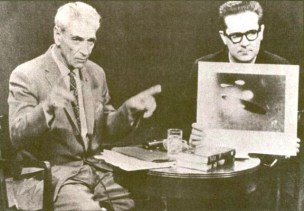
By looking at his earlier life it is possible to build a character profile of the Polish-born immigrant.

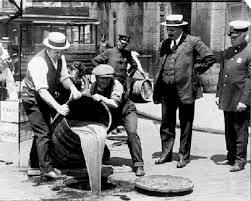
Throughout his twenties and thirties he had a variety of jobs. He served with the National Guard in Portland, Oregon, and was honourably discharged in 1919. He then turned his hand to philosophy in the 1930s, and styled himself ‘Professor George prohibitionAdamski’, founding a monastery in Laguna Beach, California. There he procured a license to produce wine for the monastery during Prohibition. However, much of it was sold on the black market, to the extent that he told two of his followers that he was ‘making a fortune’. Naturally, he was disappointed by the repeal of Prohibition and later commented that had it not been for the legislation of alcohol he would not have had to ‘get into this saucer crap’. This does not bode well for the encounter story he would later tell to the world.
He wrote two books on his encounters, the first, Flying Saucers Have Landed (1953),InsideTheSpaceShipsByGeorgeAdamski-web the second, Inside The Spaceships (1955). Undoubtedly, he was trying to cash in on the phenomenon that had gripped the public’s imagination. The final blow to his claims came in 1955 when four of the people who had been with him on the 20th November 1952 admitted that they had seen nothing of what Adamski claimed. Right up to his death on the 23 rd of April 1965 George Adamski continued to proclaim his accounts were true. There are a few ufologists however who still see merit in some of his claims.
Government cover-up (The Roswell Incident).


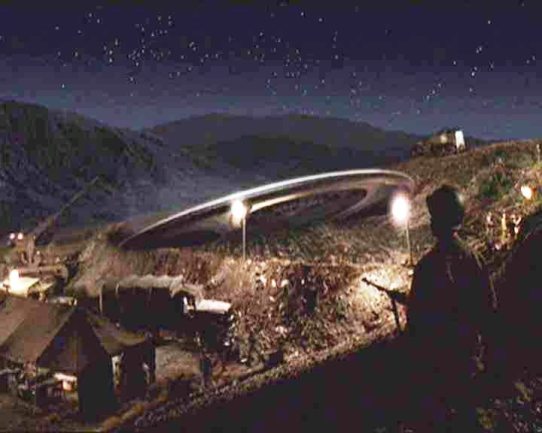
Even world governments are not beyond dipping their toes into the murky waters of Roswell crash depictiondeception. When it comes to UFOs and ‘national security’ issues they are arguably the supreme masters. An obvious example of this is the Roswell incident. On July 6th, ‘Mack Brazel, who operated the Foster ranch near the town of Roswell, New Mexico, turned up at Sheriff George Wilcox’s office with pieces of odd wreckage that possessed out of the ordinary properties. He had discovered them, and similar pieces, strewn across a 1-kilometre area of the ranch earlier. The sheriff informed the Roswell army base and spoke with Major Jesse Marcell, the Intelligence Officer for the worlds only atomic bomb unit. Marcell also checked the material and noted its very strange properties.
He informed Colonel William Blanchard, his base commander, of the find. Both Marcell, and Counter-Intelligence Officer, Sheridan W. Cavitt, were ordered to visit the site and collect the debris. Marcell later stated, after viewing the crash site, ‘It was nothing that hit the ground, or exploded on the ground. Its something that must have exploded above the ground, travelling perhaps at a high rate of speed’ … ‘It was quite obvious to me, familiar with air activities, that it was not a weather balloon, nor was it a plain or a missile.’ He and Cavitt filled their vehicles with as much debris as they could hold and made their way back to base.

The following morning, after sealing off the area, Col. Blanchard sent soldiers and military police to the ranch to make a detailed search. Meanwhile, back at the RAAF base, Press Officer, Lieutenant Haut issued a press release stating that a ‘flying disc’ had been captured. The news was heard on local radio and made the evening editions of the local papers. It was shortly after that the cover story came into effect.
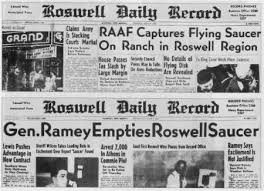
Roswell Daily Record

By now Major Marcell had been instructed to take himself and the wreckage to Wright Field (now Wright-Patterson Air Force Base) in Ohio. On the way he stopped off at the headquarters of the Eighth Air Force, Fort Worth. No sooner had he landed at Fort Worth when he was approached by General Roger Ramey and told, ‘Don’t say anything. I’ll take care of it’. He was acting on the instructions of Colonel Thomas Jefferson DuBose, the Chief of Staff at Fort Worth, who in turn was acting on the instructions of General Clemens McMullen, the Acting Director of Strategic Air Command in Washington who had gotten wind of the press release and had ordered DuBose to invent a cover story.

There then followed a photo session in which Marcell posed with bogus wreckage of a weather balloon and radar reflector made of foil and wooden sticks.

The press were then told that a mistake had been made and that it was not a flying disc that had been recovered, but a radar reflector. This cover story went out at about 5 pm, central time, and Marcell was sent back to Roswell and forbidden to speak to anyone. Claims that army personnel also discovered alien bodies and the main body of the UFO at the site began to circulate.

More recently a counter-claim that it was Brazel and several others who discovered the remains of four extraterrestrials has come to light. If this were true Cavitt and Marcell would have been informed of this by Brazel prior to their inspecting the crash site.

The military has changed its story as to the provenance of the so-called alien bodies on occasion. At one point they claimed they were rhesus monkeys, used as part of a military space-travel experiment, which later changed to artificial human crash test dummies, dropped from high altitudes in human endurance experiments. The latter story certainly isn’t true as test dummies were not used until the 1950s, nor, would they account for the small stature of the alleged creatures found at the ranch.

It is beyond dispute that the military were, and still are, trying to keep secret what crashed that night at Roswell. Some researchers believe that they may have been telling the truth when they said the debris was from a balloon, even if the wreckage shown was not from the actual balloon that crashed. At the time the US Navy and the CIA were involved in the Moby Dick programme, which sent high-altitude balloons over the Soviet mainland on spying missions. There was good reason to keep this secret. However, the stumbling block to this theory doesn’t fit the description of the size or disposition of the debris field described by Marcell who, as we will recall, stated that ‘It was nothing that hit the ground, or exploded on the ground. Its something that must have exploded above the ground, travelling perhaps at a high rate of speed’ … ‘It was quite obvious to me, familiar with air activities, that it was not a weather balloon, nor was it a plain or a missile.’

The Alleged Socorro UFO Hoax. [24th April 1964]
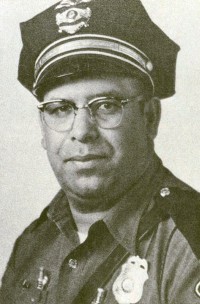
 

zamora2It has taken 46 years for this revelation to emerge, regarding the Lonnie Zamora sighting in Socorro, New Mexico. Was the landed UFO and its occupants witnessed by Zamora nothing more than an elaborate school prank?

While pursuing a speeding car, police officer Lonnie Zamora heard a loud explosion. He thought that it might have come from a nearby dynamite shack and broke off the pursuit to investigate. He saw a cone of flame travelling over a hill and followed it. It led him to a strange-looking craft and two figures, dressed in “white coveralls” walking around it. He pulled up about 100 ft from the landed, 20 ft “aluminium-white” oval object resting on structured “legs”. As he climbed from his car he bumped his head and his glasses fell off. On approaching the object the figures suddenly jumped out of sight. Shortly after a flame appeared beneath the craft and it roared off over the hill. There was a high-pitched whine and then silence.

On close inspection of the landing site, four “landing impressions” were discovered along with areas of burnt bush, near to where the craft had sat. When asked by an officer, whom he had radioed, what the craft looked like he said, “It looks like a balloon.”

Socorro soon became embroiled in a media circus, including officials from the US Air Force’s Project Blue Book and NICAP. Zamora’s story received not only the attention of the national media, but also the International media. To-date, it is still one of the most celebrated cases in UFO history.

PAULING-COLGATE LETTER
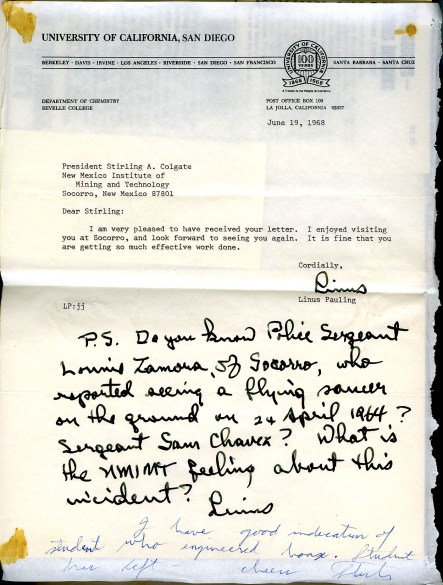
letter-from-lp-to-colgate-6-19-1968In 1968 a letter to Dr. Stirling Colgate -President of New Mexico Tech –  from his friend and multiple Nobel Prize winner Dr. Linus Pauling landed at his door. In the letter he claimed to be researching the Socorro-Zamora landing case and was writing to see if Colgate knew anything about the incident. Colgate’s response leaves little doubt that the incident was the work of tricksters.

In 2009, UFO researcher and author, Anthony Bragalia – a regular contributor to the UFO Iconoclast(s) – contacted Dr. Colgate, a world-famous astrophysicist at Los Alamos National Laboratory, to see what his current thoughts were on the Socorro incident and to see if he could shed any further light on the incident. In his email to the then 84-year-old Colgate he attached the 1968 Pauling letter containing the handwritten notes Colgate had written at the time.

It took several days before Colgate replied to the author’s communiqué. His answers to the questions posed were sparing and cryptic. To the first question, ‘Do you still know this to be a hoax?’ he answered, ‘Yes’.

The second question asked if he could expand on what he wrote to Pauling about the event. He replied, ‘I will ask a friend, but he and other students did not want their cover blown’.

Thirdly, when asked how the hoaxers did it, Colgate simply replied, ‘Will ask’.

To the query, ‘Have you ever publicly commented on this?’ he replied, ‘Of course not’.

Colgate indicated to Bragalia that he would make further enquiries into the event, but as yet he has not received any communication from him, leaving him to speculate as to the reason why.

CORROBORATIVE EVIDENCE

New Mexico Tech

From the mid 1970s to the early 90s Dr. Frank T Etcorn was a Psychology Professor at New Mexico Tech. He had an interest in the Socorro UFO event some ten years before his tenure at the College. Anthony Bragalia became aware of his interest and contacted him to see if he had discovered anything about the sighting or had gleaned any new information about what had really happened. Etcorn related to him that in the mid 1980s a young student of his had examined the case as a project. She had contacted alumni who were at Tech during 1964. She claimed she had found one of the students who had been involved in the hoax. Though he did not give details concerning the hoax and refused to have his name mentioned, he nevertheless confirmed that it was a hoax. Interestingly, she also discovered through records that on the day of the sighting a rear projection device had been stolen from the campus.

Etcorn and Bragalia went on to speculate as to how the student ‘Techies’ may have pulled off the stunt. Their ideas were not beyond the abilities of the ‘smart Techies’ to create. They included:

  • A large helium balloon resting on the desert floor with landing struts attached, to be released on cue.
  • The use of explosives, pyrotechnics, model rockets, thrown flares or a flame device to simulate the ‘roaring’ or ‘whining’.
  • Small students dressed in white lab coats acting as ‘aliens’.
  • The ‘landing depressions’ were probably dug out by hand.
  • The creosote bushes were torched deliberately.
  • Surrounding soil and rock area ‘salted’ with silicon or trinitrite from the school’s geology lab.
  • Zamora was probably lured to the site by another student, whose car he had been chasing.

ENTER DAVE COLLIS

Collis was a freshman at New Mexico Tech. In 1965, a year after the Zamora sighting, he and some friends intended to carry out a ‘paranormal’ prank and shared his idea with a trusted Professor. Tellingly, the Professor told him that the Tech had a long history of pranking  and that one of them was especially notable. He then confided to Collis that the Zamora sighting was a hoax, done by Techie students. Collis, who is a pyrotechnics expert, said that it had always surprised him that they didn’t seem to realise just how ‘terrestrial’ the Zamora UFO seemed to be in the first place. The name of his Professor still remains a mystery.

WHAT MOTIVATED THE HOAXERS?

In this instance it would appear to be revenge. The Socorro police didn’t have a very good relationship with the students back then. Zamora in particular had a reputation for harassing the Techie students for no apparent good reason, ergo their motive for getting back at him.

QUESTIONS AND INCONSISTENCIES

Whilst this author does not discount the possibility of a hoax being committed, there are a few disturbing questions that require answers, namely:

  • Zamora’s glasses: We are told the officer’s glasses fell off as he climbed from the car. Yet strangely there is no mention of them being put back on immediately. Could it be we are being subtly led into believing that this is why Zamora did not see the ’UFO’ for what it really was? Furthermore, an article, written by Patrick Huygue in the Anomalist, No 8, Spring 200, reveals that Zamora lost his glasses when he ran from the UFO as it took off , and not as he got out of the car to take a look at the craft. This explanation seems more credible than the former.
  • Colgate’s silence: Why did Colgate really cease communications with Bragalia?
  • Project student and discovered hoaxer: What is the name of the female student who examined the case in the 1980s and that of the self-confessed hoaxer she had uncovered?  Surely the hoaxer has nothing to fear by coming forward after all these years.
  • The ‘trusted Professor’: had apparently been at the College for many years, so why does his identity still remain a mystery?
  • The balloon: Zamora claimed that when the UFO took off it travelled very fast over him. This does not sit well with the flight capabilities of a balloon, unless there was a very strong wind blowing that day.
  • The mysterious figures: Bragalia would have us believe that the two humanoid figures seen next to the craft/balloon and wearing ‘white coveralls’ jumped out of sight when Zamora approached them – presumably behind the so-called balloon. However, when the object took off they were nowhere to be seen. Having looked at images of the landing site taken at the time, I could see no possible place where they could have concealed  themselves.
  • The young student who, in the mid 1980s, allegedly discovered the identity of one of the hoaxers also claimed she had discovered, through campus records that a rear projection device had been stolen from the campus. If, as Bragalia and Etcorn speculated, a large helium balloon, explosives, pyrotechnics and model rockets were used in the elaborate hoax, then why weren’t they also recorded as stolen in the campus records?

For this author the case still remains open. There are far too many unanswered questions to arrive at a firm conclusion. I therefore remain open-minded on it until such time as conclusive evidence is produced, one way or the other.

© David Calvert 2011

Please note that at the bottom of each blog page there is a “Comments” box and a “Like” button, should you feel inclined to use them. Thank you.
WHAT THE RANCHER SAW.

WHAT THE RANCHER SAW

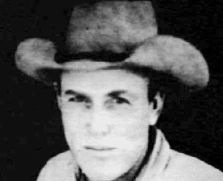
William Ware Brazel, or ‘Mack’, as he was affectionately known, was a no-nonsense 48-year-old foreman for the J. B. Foster sheep ranch, 30 miles southeast of the small William_Mac_Brazel1cattle town of Corona, New Mexico, when he discovered strange debris in a pasture with ‘out of this world’ properties. What he discovered set in motion a chain of events that led to the US Government, for the first and only time in its history, to state that UFOs not only existed, but that they had one in their possession. Thus, in July of 1947, the seeds of the now legendary Roswell Incident were planted.
But was there more to Brazel’s role in the affair than has previously been attributed to him i.e. that he found some strange metal, reported it to the sheriff, the media, and the army, the latter detaining him for a week before he was finally released, having now changed his original story of finding ‘only’ strange metallic-like debris to that of a weather balloon, and went home refusing to talk about it again.

Certainly, ranchers in those parts were familiar with weather balloons and had no trouble identifying them. That Brazel suddenly changed his story after being detained by the military is somewhat telling. It further strains credulity when hand-picked officers of the 509th Bomb Group, the top US military unit at the time, admitted that they too had been initially mistaken over the nature and provenance of the debris and that what they had in their possession was indeed a weather balloon.

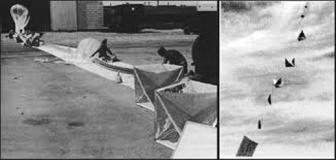
Skyhook  Balloon and Payload

skyhook balloon and payload

It was on the 8th July 1947 that Mack Brazel gave the only interview that is directly attributed to him. It took place in the offices of the Roswell Daily Record and was given whilst he was still in the ‘custody’ of the Army Air Force (AAF). It appeared in the following day’s edition of that paper. He was to give three other known direct interviews concerning the incident.

The first had taken place two days earlier, July 6th and was conducted over the phone to KGFL announcer Frank Joyce from the Chavez County Sheriff’s Office.

The second was in the home of the radio station’s owner, Walt Whitmore, on Monday, July 7th, just before he was taken into custody by the military the next day and the balloon cover story went into effect.

The final interview was conducted by El Paso radio station after the AAF had held Brazel for a few days whilst the ranch was being cleared and ‘sanitised’ of the debris. Again, the prepared weather balloon cover story was undoubtedly repeated.

Researchers and ufologists alike have been bothered ever since regarding Brazel who – among all other Roswell participants – was singled out and effectively arrested for an extended period of time. And what did he mean when he made the cryptic remark to a radio station announcer that the so-called ‘little green men’ were not green. What else had he seen which caused him to make such a remark?

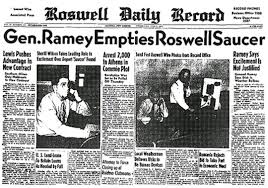
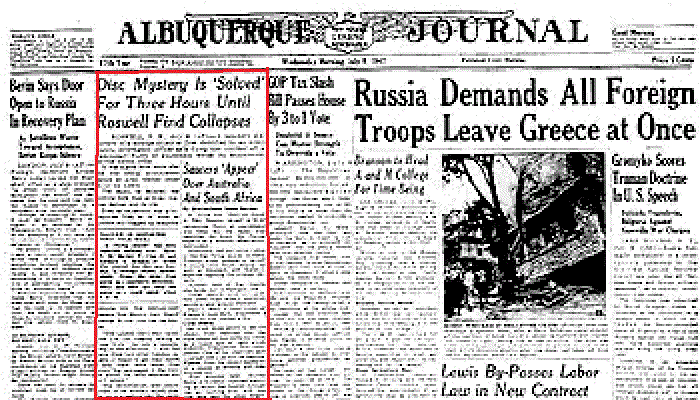
Further, two articles appeared in print on July 9th 1947. The first in the Roswell Daily Record, under the title Gen. Ramey Empties Roswell Saucer, the second in the Albuquerque Journal in the Harassed Rancher … article. Both now retracted the previous day’s proclamation that a ‘flying saucer’ had been found and asserted the military line that it was the remnants of a weather balloon with attached radar reflector.

roswell daily record

Alb journal

In the latter, however, Brazel’s final comments went apparently unnoticed. The article concluded that on at least two occasions Brazel had found weather balloons on his land. What he found on that fateful day, however, did not resemble any of those previous finds.

Mack died in 1963, aged 64 and took what he knew to the grave with him. Even close family members were not made privy to what he knew. What we know of him comes from his surviving family members. He was a throwback to the ‘old-time cowboys’ a no-nonsense sort of guy whose word and handshake were his bond. He was also a man of few words.

His son, Bill Brazel Jr., nevertheless, was able to put together a basic scenario of what happened to his father and obtained from him the fact that he was upset at being ‘put in jail’ for what he thought was a ‘good deed’. Although embittered and outraged by his treatment at the hands of the military he remained silent as to what he really knew, lest his family should suffer the consequences of his saying too much.

We have the testimonies of other parties involved in the incident who claimed they were threatened by military and Government officials to keep quiet about what they knew or pay the ultimate price.

Whether Mak’s youngest son, who was seven years old at the time, knew something the others did not we will never know as in 1960 he disappeared under mysterious circumstance and has never been seen since.

The little Mack did tell his family consisted mainly of his finding the ‘stuff’ which he said had come from an explosion not a crash – because it was all in pieces, and the surrounding vegetation was singed. The curious metal was different from anything he had ever seen as it could not be burned, cut, scratched, or whittled with his knife. He also recalled seeing strange writing on some of the debris that looked like ‘figures’ to him. However, Lorrene Ferguson and Floyd Proctor, neighbours of Mack, recalled his description of the pieces to them as being more like ‘wiggles’, similar to the figures found on Chinese or Japanese firecracker wrappers.

According to Bill Jr., the army had told Mack that they had established the debris had certainly not come from anything made by them.

Descriptions of what each witness saw and handled, regarding the debris, have appeared in numerous books and articles and can be concisely described as:

 [1]: Hand-sized pieces of very thin, very light, though extremely strong metal-like strips, the colour of dull aluminium or lead foil which were impervious to being cut, bent, burned or scratched. Some of them appeared to have a very slight curvature suggesting they had come from the rounded surface of a larger structure, their conditions suggesting they had been blasted from it.

 [2]: Small hand-sized pieces of an unknown quantity of very thin and light ‘metal’ possessing the dual qualities of being both solid and fluidic. When wadded up in the hand and then placed on a level surface it would revert to its original, seamless state without showing a mark on it. This, too, could not be cut, scratched or burned. When held in the hand it seemed weightless.

 [3]: A large amount of small, to hand-sized, thin, brown, parchment-like material which was also impervious to cuts, scratches or burns.

 [4]: An undisclosed amount of very light, thin, brownish ‘I-beams’, reminiscent of balsa wood. Though they could not be broken, these three eighths of an inch square (approximation) and up to 2-3 ft long ‘beams’ could be flexed slightly. They had ‘writing’ or strange, purple pastel symbols along their inner edge, imitating hieroglyphic or geometric formats.

[5]: An unknown amount of pencil-sized or smaller ‘beam shards’, light, and brownish in colour, and devoid of any ‘writing‘. As with the larger ‘I-beams’ they were slightly flexible and impervious to being burned, scratched, whittled, or broken.

[6]: Small pieces of a very strong and black, Bakelite-type substance (quantity unknown).

[7]: An undisclosed quantity of very thin, and very light thread-like ‘wires’ which also could not be broken or permanently distorted.

[8]: A 2-3 inch square, palm-sized, black box, seamless and small, which could not be opened.

[9]: A smooth and seamless, 3-4 inch diameter by 4-6 inches long, dull aluminium ‘collar’, comprising a ‘flange’, also described as a ‘pipe sleeve’ or ‘strut‘.

At the behest of his friends, Brazel stuffed some of the above items into a cardboard box and headed off to Roswell, little suspecting what was about to befall him at the hands of the military. The nature of the material he carried was sufficiently exotic enough to warrant the despatch of two of the army’s senior intelligence officers to investigate.

By all accounts Brazel was a patriotic, law-abiding civilian. Why then did the military feel compelled to put him through an ordeal ordinarily reserved for suspected espionage agents and ‘enemies of the state’? If all Mack Brazel found was ‘funny metal’ then surely it would not have taken the military all that time to explain it away or necessitate his incarceration for a week – if that was all he found.

It wasn’t until May 1982 that investigator William Moore, following a lead from a friend, located and interviewed Frank Joyce.

frank joyceJoyce had been a 24 year-old announcer for Roswell radio station KGFL in 1947, and a stringer for the United Press wire service. He got into trouble with the Air Force for placing their press release of having ‘captured’ a flying saucer, on the UP ‘wire’, via Western Union, thereby, turning what was meant to be a localised story into a national and international phenomenon.
In 1982, Joyce was still a media personality, and was clearly wary of speaking of his involvement in the Roswell affair lest it should jeopardise his career. He was, therefore, not wholly forthcoming with Moore in his interview.

According to Joyce he phoned the Chavez County Sheriff’s Office during his Sunday afternoon radio show to see if there were any worthy news items he could report on air. Sheriff George Wilcox put Mack Brazel on the phone. Joyce then interviewed him off-air. Following his conversation Joyce suggested to Sheriff Wilcox that they should call the Roswell Air Base for assistance, thus launching the military’s involvement in the affair.

During his conversation with Moore, Joyce never once mentioned what it was that Brazel had found during his first telephone conversation with him, but was emphatic that there was no mention of ‘balloon’ or ‘balsa parts’. He did remark, however, on Brazel’s terrified state of mind at the time, but did not elucidate further on why the rancher felt that way.

Then Brazel suddenly turned up at the radio station a few days later with a different story to the one he had told Joyce in their telephone conversation Joyce confronted him over his new story, whereupon Brazel told him. “Look son, you keep this to yourself. They told me to come in here and tell you this story or it would go awfully hard on me and you.”

When Moore asked Joyce if Brazel ever mentioned bodies to him on the phone, he replied, cryptically, “I can’t go into that. I don’t want to say.”

When Moore squeezed him for more information, Joyce relied that he had said all he was going to, and that he had made up his mind a long time ago that he would only go so far with that part of the story … “whatever that thing was,” he concluded, “the rancher saw it all, and it didn’t originate on this planet. What I heard later about the Air Force having bodies of little men from space … was totally consistent with what I heard at the time.”

On March 31st 1989, Joyce was interviewed again, this time by Donald Schmitt and Kevin Randle. He refused for the interview to be taped. He reiterated the same story he had told Moore, but added a few minor details. Apparently, as Brazel was leaving he turned back to Joyce and said, “You know how they talk about little green men? Well, they weren’t green.”

Schmitt and Randle interviewed Joyce on five other occasions, between 1990 and 1992. His story did not change significantly. Nevertheless, when Joyce got to the part where he claimed to have confronted Brazel about the discrepancy he said, “The story is different, especially the part about the ‘little green men’”, to which Brazel apparently replied this time, ‘Only they weren’t green.’

Joyce’s story was clearly evolving with the passage of time. Was he feeling more secure with the passing of the years? Had the fears he had harboured if he revealed too much now ebbed? Or was he simply embellishing his story? The latter is unlikely, as there was no apparent motive or gain to do so.

If Joyce’s story is true then Brazel also came across bodies sometime during his discovery of the debris field and reported this fact to Joyce. This is possibly closer to the truth than the speculation that Brazel was shown the non-terrestrial bodies by the military in order to maintain his silence and complete cooperation on national security grounds. We can safely assume that the former scenario is true as it was borne out by Joyce in a 1998 interview with Randle and Schmitt in which Joyce was more forthcoming.

His initial telephone conversation with the distraught rancher, who was complaining about the stuff scattered around his ranch and the effect it was having on his sheep went something like this:

Brazel

[angrily]: “Whose gonna clean all that stuff up? That’s what I wanna know. I need someone out there to clean it up.”

Joyce:

“What stuff? What are you talking about?”

Brazel:

[sombrely]: “Don’t know. Don’t know what it is. Maybe it’s from one of them flying saucer things.”

Joyce:

“Oh, really? Then you should call the Army Air Base. They are responsible for everything that flies in the air. They should be able to help you or tell you what it is.”

[At this juncture Brazel apparently really started losing his composure].

Brazel:

“Oh God. Oh my God. What am I gonna do? It’s horrible, horrible, just horrible.”

Joyce:

“What is? What’s horrible? What are you talking about?

Brazel:

“The stench. Just awful.”

Joyce:

“Stench? From what? What are you talking about?

Brazel:

“They’re dead.”

Joyce:

“What? Whose dead?”

Brazel:

“Little people.”

[Joyce was sceptical but decided to play the role of Devil’s Advocate with Brazel].

Joyce:

“What the …? Where are they? Where did you find them?”

Brazel:

“Somewhere else.”

Joyce:

“Well, you know, the military is always firing rockets and experimenting with monkeys and things. So, maybe … “

Brazel:

[shouting] “God dammit! They’re not monkeys, and they’re not human!”

[Brazel then slammed the phone down on him].

Joyce then told Schmitt and Randle that when Brazel came into the radio station sometime later to retract his statements in favour of the balloon cover-story, he was accompanied by the military and was under a great deal of stress.

Joyce challenged him about the ‘little green men’ comment he made in their original telephone conversation, to which he replied that they weren’t green. Then he left with his escort.

But this was not the last that Joyce was to see of Brazel. One or two days later Joyce’s boss, and owner of KGFL, Mr. Whitmore, turned up to see him and took him for a ride. They were accompanied by an ‘odd looking fellow in a uniform’ that Joyce didn’t recognise. They drove north out of Roswell into Lincoln County, stopping at a one-room shack just off the road.

His boss then told him to go into the shack, which he did, alone. Shortly after, Brazel entered. “You’re not going to say any more about what I told you the other day, are you?” he asked Joyce. Joyce assured him he would not.

“You know, our lives will never be the same again.” Brazel said. With that, he left. So, too, Joyce and his companions. From that day on Joyce never saw Brazel again, nor the strange uniformed passenger who accompanied both him and his boss.

In order for single-witness claims to be deemed credible, they require the corroborative testimonies of others. Over the intervening years such testimonies have been given.

Dee Proctor, who claims he was with Brazel on the day he found the debris, took his seriously ill mother, Loretta, to a remote site 2.5 miles east-southeast of the debris field in 1995 to show her where Brazel had found ‘something else.’ Why, one has to ask oneself, was he compelled to risk the life of his mother in order to do so? What other information did he share with his mother?

William Moore (1985), claimed that via a governmental ‘confidential informant’ he was told a year earlier that several badly mangled bodies had been recovered in a state of decay southeast of the debris field, and it was suspected they had ejected from the craft shortly before it exploded.

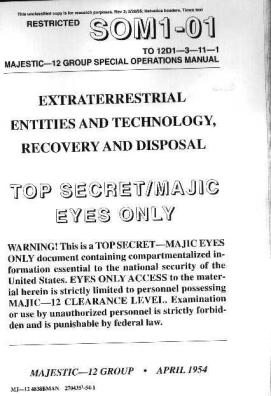
The controversial MJ-12 documents appear to contain and confirm this account of the Roswell incident.

MAJIC 12

Hope Bakla (1998) and a friend were having lunch in a Corona restaurant one day when and elderly man came in and sat next to them. He engaged them in conversation, later telling them his name was Jack Wright, and told them he was returning from an Albuquerque hospital where he had just been told he would not require open-heart surgery for a heart condition. He spoke of Roswell and asked of they were going out to the crash site. They appeared ignorant of the now famous incident. He filled them in on the details, stating that his father had been a ranch foreman for the Proctors at the time of the incident and he sometimes helped him out (he was in his early teens then).

One day, he said, Brazel had come over to the ranch in a state of excitement, and wanted someone to return with him to the Foster ranch to see something. He and a few other kids decided to follow Brazel back to the ranch. The first indication that something was wrong came when they saw a number of hawks and buzzards circling something in the distance. Eventually they came across a small body on the ground, then another. The ‘little people’, as he described them, had very long, thin fingers, and that the image was indelibly imprinted on his brain to that very day.

That a man, given a new lease on life, would make up such an unbelievable story seems unlikely.

Meyers Wahnee related a story about the Roswell incident, and his involvement in it to his family during the last year of his life in December 1981. He had been a pilot and Air Crew Commander of the 714th Bomb Squadron, 448th Bomb group in 1947.

He said there were three separate sites and that bodies were found and flown first to Texas, and that many of the men involved showed fear. He also mentioned ‘decomposing body parts’ found among the Foster ranch debris field. In what amounts to a death-bed confession, he told them, “It really happened.”

If we accept these testimonies then it means that it affects what we know of the Roswell incident, inasmuch as Maj. Jesse Marcel and CIC Capt. Sheridan Cavitt, who accompanied Brazel back to the Foster ranch on the 6th and 7th of July to investigate, must have known about the bodies. Brazel had to have told them about them, as he wanted the mess cleaned up.

Whether Marcell actually saw the bodies is a matter of conjecture. On July 8th, the time when the bodies would have been taken to Roswell, he had been despatched to Fort Worth, returning on the 9th. Interestingly Cavitt refused Marcel access to his report upon his arrival back in Roswell.

Because of what we now know there are a lot more questions that require answers. Investigations are still on going to find them.

Given the amount of evidence isn’t it about time we laid to rest, once and for all, the weather balloon hypothesis, so favoured by the hard-nosed, bloody minded, and uninformed obstructionists and sceptics.

REFERENCES.

UFO Magazine (2000): Sept/Oct. issue, pp. 56-63; Nov/Dec issue, pp. 28-33; 66-9. Quest Publications International Ltd.
The Mammoth Encyclopedia of Extraterrestrial Encounters (2002): Constable and Robinson Ltd.
Wood, Dr. Robert M, and Wood, Ryan S (1998): The Majestic Documents. Wood and Wood Enterprises.

© David Calvert 2011

Please note that at the bottom of each blog page there is a “Comments” box and a “Like” button, should you feel inclined to use them. Thank you.

Ectoplasm in Old Changi Hospital, Singapore.

Changi Ectoplasm.

A Case Analysis by David Calvert.

 Foreword to Old Changi Hospital Analysis.

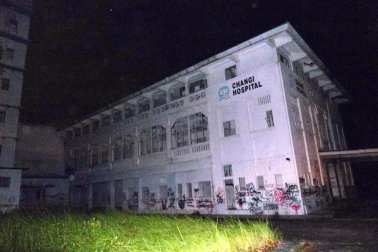
During the Japanese occupation of Singapore in WWII, Old Changi Hospital was used as an interrogation center and torture camp. Many who were incarcerated there died. It is hardly surprising  therefore that the derelict building is said to be haunted by those who suffered and died within its walls.

changi-hospital 3

Image One

changi1This shows the top of the staircase,under relatively normal lighting conditions, where the ‘ectoplasm’ was witnessed. It was photographed in close proximity to the security tape from the foot of the staircase.
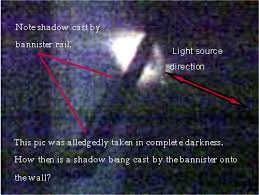

 

Image Two

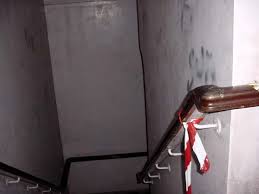
Here is the same area photographed from the foot of the stairs looking up.

changi 2

According to the testimony of the individual who took this photo (a member of a ghost hunting team) the picture was taken in complete darkness. He claims that they felt they were being followed by something and so turned around and snapped off this shot without using the flash.

Post-Analysis Comments.

If this photo was indeed taken in complete darkness, how can one account for the shadow cast by the handrail onto the wall? Furthermore, the security tape seen in image one shows how dangerous this area is, so who in their right mind would go wandering about in an unfamiliar and unsafe environment without the aid of a torch – which brings me to my next comment.

You will note the shape of the so-called ‘ectoplasm’ is elliptical. It looks very reminiscent of a torch beam being shone onto the wall at an angle. Don’t believe me? Try it for yourself. Note also the bannister rail, behind which the anomaly appears, is partially lightened at the front by the back reflection off the wall. This suggests to me that a torch may have been used to accomplish this ‘anomalous’ image.

Look at the light source directional arrow. At first I thought this was the direction and angle the light source had to have come from in order for it to attain its elliptical shape. My initial suspicion was wrong. For it to be true, the tear drop shape would have to be the other way around. The light is actually being projected from the left (as we view it). If one looks at the first staircase image, there doesn’t appear to be any viable way this could be achieved.

Might this be a photo of another stairwell? There is that possibility. However, what lends credence to it being the same stairwell is the security tape hanging from the raiI in both images. Look carefully at the upper portion of the  directional arrow on the annotated image and you can just about make out the shadow of the security tape seen in image one.

Given the reflective qualities and shape of the light would certainly suggest a torch beam hypothesis. How this effect was achieved however is open to speculation.

What do you think?

© David Calvert 2011

Please note that at the bottom of each blog page there is a “Comments” box and a “Like” button, should you feel inclined to use them. Thank you.

EXOBIOLOGICAL LIFE.

EXOBIOLOGICAL LIFE

David Calvert

It can be truly said that nature abhors a vacuum. Our world teems with life of every description, ranging from the mundane to the downright outlandish. It would appear that every niche of our planet is populated with life, in one form or another. Even the most hostile and extreme environments are hosts to microbial life forms know as extremophiles.

Cyanobacteria.

Cyanobacteria3

One such species is the hyperthermophiles. They can be found thriving in temperatures exceeding 80° C, whilst at the other end of the spectrum can be found the psychrophile that exists at 15° C or lower. Then there are the toxitolerants that can exist in pools of benzene and on nuclear waste. Some, like the anaerobes, can even survive in the absence of oxygen, and the list goes on. It would appear that the blue planet we call Earth is a veritable zoo on which multitudinous life forms have taken hold. But what of exobiological life forms? Does our universe teem with life as some scientists have theorised? Moreover, have some of those entities evolved into sentient creatures like man?

Panspermia  Hypothesis.

Assuming that life exists throughout the universe begs the question as to how these cometplanets were seeded. We know that extremophile bacteria can survive even the harshest of environments, even that of outer space. The theory suggests that the transport system for these possibly dormant bacteria may well be meteoroids, asteroids, and even comets. Having been trapped in these bodies they are carried through the universe until colliding with planets etc. If the conditions on the planet are ideal the bacteria are activated and the evolutionary process begins.
Since  the discovery of Martian meteorites on Earth we now know for certain that interplanetary transfer of material takes place and, following in the wake of new scientific discoveries, the Panspermia Theory is now considered a credible hypothesis by the scientific community who had once labelled it ‘ridiculous’.

Through the evolutionary process these bacteria slowly evolve into various species, over a period of aeons. Each assumes a particular niche on its home world. Eventually, one of those species reaches a point where it becomes the dominant life form. As on Earth, intelligence arises and they go through their equivalent of the Stone Age, Bronze Age etc until they reach a level of technological sophistication that allows them to travel beyond the confines of their world.

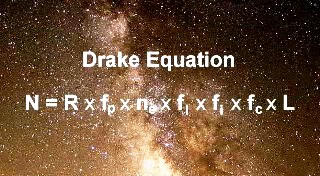
But what might these creatures look like? We humans are the product of our environment. Like us they would be shaped according to gravitational effects, solar influences, and atmospheric conditions etc. It is not unreasonable to think that if they had a 20,000 year evolutionary head start on humanity, and survived self-annihilation, they might eventually travel beyond the confines of their solar system and out into interstellar space. SETI scientist Frank Drake formulated an equation as to how much intelligence there may be in the universe. He came up with a disturbingly high number.

For the sake of argument let’s assume there are one thousand worlds in our galaxy alone that have achieved this level of sophistication, each with a substantial head start on us as regards interstellar flight at faster than light speeds. Lets further assume that only a handful of extraterrestrial species then stumble upon our world and decide to investigate. They study our social structures, our technological achievements, our religions, fauna and flora, among other things. Inevitably, during this process, humankind becomes aware of their presence. Some encounters appear so bizarre and outlandish that their stories are summarily dismissed as mental aberrations, hoaxes or just downright lies. Unquestionably, a fair amount of encounters fall under such categories. However, a small percentage of these are not so easily dismissed.

ALIEN TYPES.

THE GREYS.

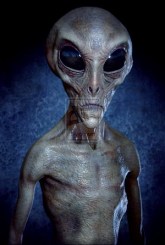
Grey_Alien1The most commonly reported alien is the infamous ‘Grey’, so-called because of its skin colouration. These are said to be small in stature and devoid of external human organs. Most notable are their large, opaque eyes, bulbous heads, and lack of genitalia. From the foregoing features we can extrapolate, to a minor extent, what their home world might look like.

 The large eyes, like those of an owl, would seem to indicate that it has a low light environment, which could also account for their grey skin. The slender build is indicative of a low gravity world, possibly smaller than that of the Earth. Some ufologists have theorised that these creatures may not be the dominant species of their world, but rather clones created by the dominant species – as evidenced by their lack of sexual organs. These entities and their creators are said to come from the Pleiades star system, such as the Nordic aliens.

The Betty and Barney Hill abduction, on the night of 19 September 1961, is believed to be the first recorded description of the ‘Greys‘. However, this is not strictly true. They first appeared in an article, ’Man of the Year Million’ (1893), by renowned science-fiction writer H G Wells, predating the Hill’s encounter by some 68 years. Remarkably similar entities also appear in his novels ‘First Men in the Moon’ (1901), and ‘The War of the Worlds’ (1898). Might this imply a cultural, rather than cosmological, link for the ubiquitous Greys?

NORDICS

nordic femaleOne of the earliest reports of a Nordic alien came from that of the now largely discredited George Adamski on 20 November 1952. The event was said to have taken place in the Mojave Desert, Arizona, USA. The being told Adamski his name was ‘Orthon’, and that he came from the planet Venus. If there ever was such an entity, he certainly didn’t originate from Venus. The surface temperature of Venus is high enough to melt lead and its atmospheric pressure is 94.5 times higher than Earth’s. Without a heavily pressurised suit Orthon would have exploded the moment he set foot on Earth. His physiology, and the fact he was not wearing any kind of breathing apparatus, would indicate that he would have come from a world very similar to that of our own, with atmospheric gases roughly consisting of 78.08% nitrogen, 20.95% oxygen, 0.93% argon, 0.038% carbon dioxide, and traces of hydrogen, helium and other “noble” gases. It could well be that Orthon lied in order to hide the true origins of his species which some ufologists believe to be in the Pleiades star cluster.
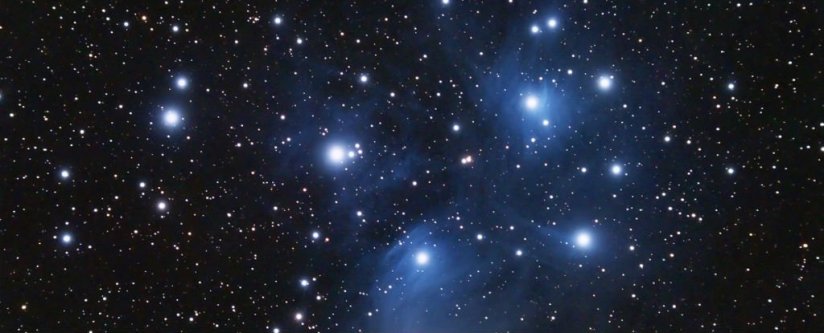
Pleiades_1024

Billy Meier, a Swiss citizen, claimed he first made contact with Nordic aliens in 1942 at the age of five, but it wasn’t until 1975 that his first ‘official’ contact with them took place. From these contacts he learned that the Nordics were from the star system ‘Plejares’, which supposedly lies beyond the Pleiades, some 420 light years from Earth in the constellation of Taurus. They further informed him that their home planet was called ‘Erra‘ – just one of ten planets that circle their sun.

Physical Characteristics

 The term “Nordic” is applied to this species because of their Scandinavian appearance. They are incredibly human-like, with light blond or white hair and pale white skin. They are said to possess remarkable pale blue eyes but, as in the human species, there are differences in their colouration and shape. They are sometimes reported as having pink, red, yellow, green or violet eyes. In some cases they were reported as having eyes reminiscent of the Greys’ – large and slanted. Eye colour is a polygenic phenotypic character. It is determined by the amount and type of pigments in the iris. Red and violet eyes occur in people with severe forms of albinism, owing to the extremely low quantities of melanin, allowing the blood vessels to show through. True violet-coloured eyes only occur due to albinism. Coupled with the pale white skin and white hair, this would suggest that these alleged entities might suffer from a form of albinism.

Although extremely human-like in appearance, there are said to be subtle biological differences between Nordics and humans, the most paradoxical of them being their skin pigmentation.

Their world is supposed to be hot and dry so one might expect from an evolutionary standpoint that the skin tone should be much darker to protect them from folate depletion created by exposure to strong sunlight. Any gene variations that result in lighter skin wouldn’t survive under such conditions. If their colouration is due to some form of albinism, then it is one that appears to have affected a large proportion of their species.

Further biological differences are said to include: Larger lung capacity (due to lower oxygen levels on their home world), copper-based blood to carry oxygen more efficiently, longer craniums, skin allows moisture to be drawn from the air, the heart is situated in the area where the human liver is and beats at around 242 beats per minute, average blood pressure is 80 systolic and 40 diastolic, extremely dilated blood vessels, blood cells are biconvex, they do not possess a pineal gland, their method of communication takes the form of telepathy, and their average life span is said to be 700 years.

THE TAILLESS REPTOID

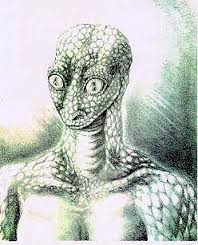
tailess reptoidThe earliest modern reference to reptoids comes from a Los Angeles news story from January 29, 1934, though the credibility of their discoverer, geophysical mining engineer G Warren Shufelt leaves a lot to be desired. Since their emergence in 1934 reptoids have now found prominence through the controversial works of David Icke et al.
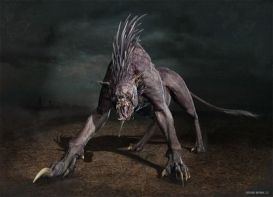
Assuming that these creatures are real, where might they have come from? Let’s take a close look at their physiology.

Physical Characteristics

The tailless reptoid is anywhere from 5 – 12 ft in height and has a muscular, lean and scaled body. There is some differentiation in scale colouration. They have long arms, ending in hands with three long fingers with opposable thumbs. Each foot has three toes and a recessed fourth one towards the back of the ankle. Each toe contains a short, blunted, claw. That they have not teats or navel would suggest they are oviparous reptiles, and do not give birth to live young. It is claimed they speak a language called “Eshu” and can also speak many other languages.  They also appear to have differentiated types of dentition, including canines. This differentiation is also noticeable in their eyes. Some have large black eyes with vertical slit pupils, whilst others possess white eyes with vertical, flame coloured, slit pupils. There is a minor tapering to the head, with two bony ridges continuing from the brow towards the back of the head. The nose is small and flattened, consisting of two small nasal cavities that slant upwards in a V formation. There are holes on either side of the head. Unlike humans their ears have no fleshy folds connected to them. The male reptoids’ genitalia consist of a penis hidden within a vertical slit at the base of the torso. In contrast to humans, however, they don’t appear to have a soft-sacked scrotum – only a rigid muscular protuberance from the base of the penis to the underside of the torso.

HOME WORLD

A pattern seems to be emerging regarding alien encounters, in that the greater majority of these extraterrestrial biological entities (EBEs) have no apparent need for any kind of breathing apparatus when visiting our world. This would suggest that their home worlds must have remarkably similar gaseous atmospheres to that of Earth.

It has been claimed that the reptoids live in the bowels of the earth which would imply that they have evolved into a warm-blooded species or that thermoregulatory adaptations within their bodies allow them to maintain their core temperatures. Whatever the case, it would appear, yet again, that their home world might well be remarkably similar to that of Earth.

The reptoid species are divided into four types.

 Reptilian-Humanoids (as above and the most commonly reported).

The Winged Draco Reptoids

The Draco Prime Reptoids

The Reptilian – Grey Crossbreeds.

THE CHUPACABRAS

ChupacabraOriginally, this creature was known as El Vampiro de Moca as some of the first killings were reported in the small town of Moca, in the Dominican Republic, 1992. Then, some three years later, accounts of it surfaced in Puerto Rica, then subsequently in Central and North American regions of Mexico and the United States. They have also been witnessed in Maine and as far south as Chile. The island of Puerto Rica became a major region for UFO sightings, so it wasn’t long before the two phenomena were linked.

 The given name for this entity is derived from the Spanish words chupar “to suck” and cabra “goat”, due to the entity’s reported predilection for attacking and drinking the blood of livestock, particularly goats.

They are commonly described as reptile-like beings, with an approximate height of three to four feet. Their stance is said to be like that of a kangaroo, with a hopping, bipedal motion. There appears to be two varieties of this entity. One is said to have a panther-like face, with large fangs and forked tongue. When it becomes alarmed it is reported to give off a sulphuric stench and hisses and/or screeches.

One story of a Chupacabra surfaced on January 20th 1996 in Varghina, Brazil. It was reported that the entity, having been captured by the military, gave off a “buzzing” sound. There are also reports of them leaving a slimy residue on their victims’ bodies. This particular case has now been proven a hoax.

Clearly, these supposed EBEs are predatory by nature and kill their prey by draining them of blood through their necks or chests, a trait know as hematophagy and which is found in three bat species on Earth. Listed among some of the chupacabra’s prey are, goats, horses, dogs, mice, sheep, and cattle. Considering their diminutive stature, begs the question as to how they are capable of bringing down larger prey, such as cattle and horses. Perhaps, like the vampire bat, they anaesthetise their victims before injecting their saliva into the animals’ bloodstreams. Anticoagulants then inhibit blood clotting and compounds prevent the constriction of blood vessels near the wound. Unlike vampire bats, however, these creatures appear to have a voracious appetite, draining their victims of every last drop of blood to the point of death. Another commonality is that they also seem to be nocturnal predators.

To this author’s knowledge these entities have never been seen on board or in close proximity to UFOs and have never been described as wearing clothing or in possession of any form of technology whatsoever, signifying that they are not an advanced species. Some ufologists have conjectured that they may have been brought here by an intelligent extraterrestrial life form and have escaped their captivity or been released into our environment by them. Others still, that they are the product of a genetic engineering experiment by the military. Whatever the truth of their origins may be you can be certain that we have not heard the last of these elusive creatures.

We look at our own planet and marvel at its complexity, variety and abundance of life found thereon. With each new discovery human knowledge grows exponentially. The current total of known species on our world amounts to a staggering 7,227,130. This number does not include animals such as sheep, goats, camels or single-celled organisms such as bacteria. Even now we are discovering hitherto unknown life forms and will continue to do so for the foreseeable future. It has been estimated that there are approximately 5,523,300 species yet to be discovered. With each new finding we become increasingly enriched by the scientific advancements that develop from the study of such discoveries.

Consider the advancements to medicine from the study of plants, of how our understanding of the atom changed our world forever, of how alchemy evolved into the science of chemistry, and astrology into astronomy. Without these, and other advancements, our species would still be in the dark ages. By adhering to outmoded ideas we would have run the risk of becoming an obsolescent species. Inevitably, old paradigms collapse under the pressure of our ever-increasing knowledge. Hopefully, one of the last bastions to fall will be the idea that we are alone in the universe.

© David Calvert 2011

Please note that at the bottom of each blog page there is a “Comments” box and a “Like” button, should you feel inclined to use them. Thank you.

THE PITYING HEART

THE PITYING HEART 

David Calvert

church 3

Jenny Bowcombe stared at the oaken figure of Edmund D’Lyle in the chancel of Saint Olave’s church, the site from where her beloved Lucy had disappeared. There was no longer any doubt in her mind that it was the remarkable resemblance between Edmund’s effigy and Lucy’s late father that had attracted her daughter to the chancel. As she looked on she, too, felt a strange affinity towards the centuries old memorial. How often she had wished it could speak, that it might resolve the endless uncertainty of Lucy’s whereabouts.

           It had taken the better part of two years for Jenny to come to terms with the death of her husband, Richard, and in her darkest moments had taken comfort in the love of their daughter. Now she too was  gone and Jenny would have ended the unremitting loneliness and heartbreak were it not for her uncompromising belief that she still lived and would someday be reunited with her.

          Richard’s sudden passing had brought an unwelcoming change in the eight-year-old’s demeanour. Withdrawn and ill-tempered, she had begun to weave a web of secrecy about herself. What worried Jenny most of all, however, were her increasingly prolonged absences from home. She had shown great leniency towards her daughter until the day she strolled into the house, two hours late from school. This time she was not going to be fobbed off with any lame excuses. She had spent the latter hour in a state of near panic. Now she demanded to know the truth.

         “I’ve been going to the chapel.” Lucy wept. “I go there when I want to talk to daddy.”

          Jenny was lost for words. Ever the pragmatist, she believed in the here and now rather than the hereafter. Finding comfort and solace in outmoded beliefs was not her style, but if it was Lucy’s way of coming to terms with the loss of her father then she would not stand in her way.

           Life continued apace in the tiny hamlet of Arken. The now fifteen-year-old Lucy was a regular worshipper at St. Olave’s and was often seen by rector Phillips staring into the ageless face of Edmund D’Lyle. Her intense fascination with the relic mystified him, though he never once broached her on the subject.

            It was on the eve of her sixteenth birthday when the storm hit the island. With merciless ferocity it raged across it, uprooting trees and flooding vast tracts of farmland in its wake. Even in the naturally formed inlet, which had provided a safe haven for countless generations of seafarers, the destruction was total as the roiling turbulence crashed in on the moored vessels, rendering them into useless flotsam. Not even hallowed ground was safe on such a night.

stormy

             From the rectory window the ageing rector Phillips witnessed the single lightning bolt strike the chapel, iridescent lights lighting up the stained glass windows from within. Braving the elements, he set out to scrutinize the damage.

             On first inspection it seemed that nothing untoward had happened, but as he approached Edmund’s effigy he noticed the fragmented shards of the knight’s steel misericord lying on the floor. They were hot to the touch. Though there was no evidence suggesting a possible entry point, the lightning bolt had apparently struck the weapon and shattered it. What he found even more perplexing was that the fine chrysoberyl jewel that had adorned its hilt was missing. It was only in the aftermath of the storm that he discovered the tangled wreckage of Lucy’s bicycle lying beneath a wind felled oak in the churchyard. Reassuring himself that she was not among the twisted foliage and broken boughs he dashed back into the chapel, fully expecting to find her poor inert body lying somewhere among the pews, but she was nowhere to be seen. Lucy had vanished without trace.

           Jenny’s memories were bittersweet. Richard’s securement as Arken’s only GP had been particularly memorable, because it was the very same day she broke the news to him of her pregnancy. Lucy became the source of his pride and joy; they were inseparable. That he harboured an ambition that she might one day follow in his footsteps were readily apparent in his choice of gifts for her. Prized among them was a gold charm bracelet from which hung a single lamp, a lasting reminder that she was his ‘lady of the lamp’.

          “Can I help you?”

          Jenny flinched and turned to see the darkly dressed figure of a clergyman standing in the aisle.

           “Sorry! I didn’t mean to startle you.” he said.

            In her eyes he saw the hauntingly familiar look of unresolved grief. He sat next to her and proffered a friendly hand, greeting her with a pleasant, almost boyish, smile. “The name’s Tremayne. The Reverend Anthony Lucas Tremayne, to be exact. I’m rector Phillips’ replacement,” he said, his face broadening into a cheerful grin.

            She took hold of his outstretched hand. “Mine’s Jenny.” 

             “I couldn’t help noticing your fascination with Arken’s local hero” he said. “He’s quite an interesting character, don’t you think?”

              “Is he? I’m afraid I’ll have to take your word for that. History isn’t exactly my strong point.”

               “Oh, indeed he was. Did you know that for centuries he was said to be the founder of this church?”

                “No, no, I didn’t.  But as I said before…”

                “Of course: ‘history isn’t your strong point’” he recalled.

                “The truth is that he was actually a crusader who fought in Alexandria and Syria. Unfortunately, he suffered a serious head wound in the latter campaign and was shipped back to England, and then on to Arken. The poor chap became quite deranged at the end and died.”

                  Jenny’s thoughts wandered from Edmund to a more recent and intimately tragic history.

                  Mistaking her abstraction as a sign of disinterest the young cleric apologised for having disturbed her and made to leave, but was forestalled by her insistence that he carry on.

                  “I’d love to.” he replied, glancing at his wristwatch. “Unfortunately, I have to keep a prior appointment. Perhaps we could meet at the rectory tomorrow to continue our chat.” he suggested. “Lord knows, I’ve had little chance to get acquainted with my flock.”

                  The airy interior of the rectory came as a welcoming respite from the excesses of the midday sun and Jenny could not help but feel a little envious of the Reverend at having such a shaded sanctuary. Unlike his predecessor, the young cleric insisted that the formalities of his office be set aside, preferring simply to be known as Lucas. Jenny was happy to oblige him; she found the use of such titles pretentious at best. That he was also more enlightened than his predecessor was evidenced by the numerous scientific journals, which adorned the bookshelves.

                  “I got the impression from you yesterday” she began, “that there was more to the story of Edmund D’Lyle.”

                   “Yes there is.” He relaxed into his armchair and took a sip from his iced tea. “During my researches into the last crusades I came across a document bearing his name. It was written by Philip De Mezieres, Chancellor to Peter the First of Cyprus. He and the King were responsible for the organisation of the 1365 crusade. They came to London to secure the help of several English knights, one of them being Edmund. As you know, he eventually returned to England and died. That he lived as long as he did was entirely due to his companion. She apparently travelled everywhere with him.”

                   The painful memories of her past began to reassert themselves again. Jenny knew only too well the wretchedness of losing loved ones. In the midst of her thoughts a single word – ‘misericord’ – brought her back to the present.

           “I was just saying as how it is something of a mystery to me.” Lucas said, in response to her question.

             “Oh! Why is that?”

             “Well, according to my records the effigy is supposed to be holding a misericord in its hand. True misericords were used to put an end to the suffering of battlefield victims. Their name is derived from the Latin for ‘pitying heart’. However, these were a special honour bestowed upon the knights by the King for their efforts in the crusades. Edmund’s is missing – jewel and all.”

         “Didn’t Rector Philips fill you in on what happened before you took over his duties?”

          “No. His departure to the mainland was rather sudden.”

          “Then you know absolutely nothing of what happened here?”

           “I’m afraid not.”

           Jenny had, wherever and whenever possible, avoided protracted conversations concerning Lucy, but to tell the story of the missing misericord without once mentioning her involvement was akin to omitting the ‘great fish’ from the biblical story of Jonah. She took a calming breath before giving her account.

            A look of surprise crossed the cleric’s face at the mention of her daughter’s name, occasioning Jenny to enquire if something was wrong.

            He looked at her with uncertainty. Smiling nervously, he replied, “There isn’t, unless your surname happens to be Bowcombe.”

            Her confirmation had a curious effect on him. He seemed reluctant to pursue the matter any further, inciting Jenny to ask again if anything was wrong.

            The mention of Lucy’s name had set off a disturbing train of thought. “It’s nothing.” he said, ultimately. “Mere coincidence.”

             “Coincidence?”

             “Yes. You see Edmund’s companion’s name was Lucy Bowcombe, too.” he said.

              Jenny sensed there was more to it than that. Something other than sheer coincidence had generated his nervous response, and she intended to get to the bottom of it.

            Failing to allay her suspicions, Lucas finally gave way.

           “You’re right;” he said, “I haven’t told you everything about the historical Lucy, and with good reason. I’m not sure I believe it myself. Perhaps if we apply the principle of Occam’s razor things will become clearer.”

           “Occam‘s razor? Never heard of it” Jenny admitted.

           “Briefly stated it’s this: if something looks like a duck, swims like a duck, and quacks like a duck, the chances are it is a duck. In other words, there’s no requirement to form a more complex assumption or theory.”

            Jenny was becoming agitated. “And the point is?”

            “I’m coming to that. But first I need to check everything you’ve told me about your daughter is correct. You said she disappeared when she was fifteen, and that the jewel vanished at the same time – yes?”

            “Yes.” she sighed.

            “And you’re quite sure that all this took place on August the 10th ?”

            “Of course I am! I’m hardly likely to be mistaken about it, now am I?” she snapped. “If there is a point to this, Lucas, I wish you’d make it.”

            He braced himself. “As a consequence of my investigations into Edmund”, he began, “I came across the story of Lucy Bowcombe. Apparently, after a terrible storm, she was discovered in the chancel by a local farmer. She was in a highly agitated state, and could remember nothing of her past, other than her name. Contemporary reports said that she was between fourteen to sixteen-years-old, and spoke in a curious tongue. The date was August 10 , 1362.”

            It was abundantly clear now what Lucas was leading up to, and Jenny balked at the absurdity of it.

            “But you said this girl spoke in a foreign language.” she argued.

             “No, I didn’t. I said that she was reported to have spoken in a ‘curious tongue’, which doesn’t necessarily mean she was foreign. Modern idioms and syntax are wholly different to what they were centuries ago. Back then they spoke Middle English, a substantial part of their vocabulary being French and stemming from the Norman Conquests. Edmund himself was of the Anglo-Norman aristocracy, so Lucy’s speech would seem like a foreign language to him.”

             Jenny fell silent. Circumstantial though the evidence was, she found it strangely compelling.

              “And there’s one other thing:” Lucas resumed, “clasped in her hand was a chrysoberyl gemstone.”

              “Have you any idea how absurd that sounds? You’re telling me my daughter was whisked back some seven centuries in time Why? How?”

              “The ‘why’ and ‘how’ of it I can only guess at. You said yourself that Lucy had never really gotten over the death of her father, and was often seen talking to the effigy as though it were he. She probably wished passionately for it to be true. Suppose that as she was in this frame of mind the lightning struck, triggering a quantum rift in time.”

              “You may be accustomed to believing in miracles,” Jenny asserted, “but I’m certainly not. It’s absolutely ridiculous!”

             “Is it?” countered Lucas. “There are some quantum physicists who would disagree. If their hypotheses of the existence of elementary particles that can travel faster than the speed of light are true, then time travel is possible.”

            “You’re concluding a hell of a lot from a mere premise. We’re not talking about sub-atomic particles here, but a living, breathing, human being.”

            “But isn’t that part of what we are; nothing more than a package of atoms strung together?” Lucas responded.

            Later that evening Jenny pondered on Lucas’ words and the documented cases he had cited in support of his argument of people claiming to have undergone temporal sojourns. Like theirs, her life had changed dramatically. Everything she had cherished was gone. Perhaps there was now a need to believe in the fantastic; to seek hope in the embryonic science of quantum physics, just as Lucy had sought hope in religion.

             The following morning she awoke from a troubled sleep. Her disquieting dream imagery had evaporated with the onset of wakefulness and was no longer retrievable. One thought persisted, however: ‘Lightning never strikes the same place twice.’ She knew this was a common fallacy, and later cursed herself for not having immediately understood her post-dream message. Unpredictably, she found herself entertaining a quite improbable notion.

            For five years Lucas bore witness to the comings and goings of his friend, Jenny Bowcombe. Of all the islanders he alone knew of the obsession that drew her to the chapel on storm filled days and nights. Then, on one particular August night, all hell broke loose.

woman in storm1

            A ferocious storm front struck the island, growing in intensity as it tore across the landscape. Only one person would venture out on such a night, and Lucas had taken up his station behind the large bay window that overlooked the chapel to watch the lonely, bedraggled, figure trudge its way through the storm and into the chancel. Past experience had taught him that it would be some time before Jenny would leave and would probably ride out the worst of the storm there. Closing the drapes, he settled down to work on the rest of his forthcoming sermon.

            Time passed and the storm grew worse. Rattling window panes and flickering house lights began to disrupt Lucas’ train of thought. He looked up from his study as an ominous peal of thunder rumbled across the night sky. The chancel was no place to be on such a night he told himself.

           As his predecessor had done before, he stepped out into the tempest and was instantly taken aback by its sheer ferocity. A cyclonic wind buffeted him mercilessly, propelling him into the rivers of mud being washed from the neighbouring hills. He pushed on through the blinding rain, his face puffed and swollen, driven by an unbending sense of guilt, which hung like a millstone about his neck. How he wished now he had kept silent all those years ago.

stormy-night-at-the-graveyard-j-d-owen

            On entering the churchyard he suddenly pitched forward, his lungs burning with sheer exhaustion. The air rasped sharply from his chest. He drew in his next breath as if it were his last. Coughing and spluttering uncontrollably, he rolled onto his back and opened his eyes.

             The transformation was stunning. As a former merchant seaman Lucas had seen St. Elmo’s fire only once in his life. It had been a brief encounter, its scattering of energy streamers confining themselves solely to the masthead. But that had occurred in a temperate climate, and one more favourable to the phenomenon. What he was witnessing now was impossible. He watched in awe the profuse streamers as they radiated out from the chancel in a state of constant flux, arcing from one structure to another. Most alarming of all was the luminescent energy field that had encompassed the churchyard. Beyond this miraculous dome the storm raged, unabated. Within it, all was eerily calm.

          Jenny Bowcombe stood before the temporal vortex, which had opened at a point just above the effigy. Its dimensions were expanding and would soon be large enough to enter. Despite the irrefutable evidence gleaned from her most recent research, doubts began to weaken her resolve. What if she were catapulted to a time centuries before the history of Edmund D’Lyle or a future world that was totally alien to anything she had ever known? The possibilities were as infinite as time itself. She pulled Lucy’s photo from her rucksack. Filling her mind with her daughter’s image, she told herself that it was now or never and edged nearer to the portal.

           “No, Jenny!” Lucas barreled down the aisle toward her, the opening shimmering briefly, as if disturbed by his unheeded appeal.

          She stepped forward and was swallowed up in the blinking of an eye.

          In that instant a powerful shock wave burst from the portal, hurling him pell-mell into the pews and rupturing the luminescent energy barrier. Darkness engulfed him.

           On coming-to, he saw Arken’s Fire Chief, Pete Layton, standing over him.

           “You’re one hell of a lucky guy.” he said. “If you hadn’t been lying between the pews when the main roof supports collapsed you’d be a gonner for sure. As it is you‘ve suffered only a few minor burns and abrasions.”

            Lucas made a feeble effort to rise from the sofa. “Where am I? How did I . . .?” He slumped back, weak and nauseous from the effects of smoke inhalation.

            “I’m sorry to be the bearer of bad news, the Chief continued, “but the chapel didn’t fair as well. It’s sustained quite a bit of damage. Its walls are still structurally sound, though the roofs almost gone. A bit of elbow grease and a lick of varnish should soon remedy the scorched pews. Which reminds me! Is this yours?”

            Lucas stared at the seared rucksack Chief Layton was holding. “Er, yes, it is.”

           “You don’t seem too sure about that.”

           “Yes, it’s mine.”

           With the departure of the paramedics and fire crew, Lucas delved into the rucksack. Amid the many reams of hand-written documents, and a treatise on fourteenth century England, he came across what looked like a copied portion of text. It was badly scorched and nigh impossible to read. Fortunately, he was able to read the catalogue number, which showed it came from the research facility at Fendlesham Library, on the mainland. Its coding further revealed that Lucy’s search into Edmund D’Lyle was way in advance of his own. He recognised, too, the words of an ancient poet she had paraphrased in the final entry of her diary: ‘Time may bring to light whatever is hidden and it will conceal and cover up what once shone with the greatest splendour’.

           Within a short space of time, Lucas would come to comprehend the true meaning behind those words.

           “Sorry to bother you, Reverend,” said Chief Layton the next day, his face suitably grimy from his ongoing investigation at the fire scene. “but one of my men has discovered something at the chapel that I think you should see.”

            A look of mild suspicion behind his bespectacled eyes made Lucas more than a little apprehensive.

            “Take a look inside.” The Chief pointed to the chapel’s memorial plinth from which a sizeable portion had been broken. “Personally, I haven’t the faintest idea about ancient burial rites,” he said, “but I thought you might.”

            Lucas scanned the murky interior. The most salient feature that struck him, as it must have Chief Layton, was that three distinctly separate bodies had been interred there. Then he caught sight of something in the mouldering winding sheets that caused his heart to skip a beat. It was a gold bracelet. Although he could not make out a hallmark he knew that the single charm that hung from it would date it conclusively to modern times.

           “What do you make of it, Reverend? A little unusual to have three bodies in the same grave don’t you think?”

           “It’s certainly unusual, but not unheard of.” Lucas declared. “I believe that what we’re looking at is the fourteenth century equivalent of a family plot.”

           “Mystery solved then.”

           “Mystery solved.” Lucas said, somewhat shocked by the ease with which his story was accepted; an outcome which would have been far different had Pete Layton paid greater attention to his local history lessons at school regarding the D’Lyle genealogy. Edmund had been the last of his line and could, therefore, not have shared his plot with any descendant.

             Lucas’ major concern now was the bracelet. It was a modern artefact and if it should be uncovered and examined during restoration work on the tomb questions would be asked, questions for which there were no plausible answers. It’s removal, therefore, was vitally important.

             Fortune smiled again on the young cleric, and when the Chief was called away by one of his men Lucas saw his opportunity and took it.

             “Well that’s about it. I’m finished here.” said Pete Layton on his return, adding, “If you’ll take my advice, you need to have that plinth sealed up right away. I’m sure I noticed something of value in there. The last thing you need is to have some would-be grave robber come along and take it.”

             Lucas flushed. “ No, that wouldn’t do at all. I’ll see to it right away.”

             In the privacy of the rectory he examined more closely the bracelet he had hastily stuffed into his pocket. It was just as Jenny had described. Unquestionably, one of the tomb’s occupants was her daughter. Could the third body, he wondered, be Jenny‘s?

             He later recalled the scorched document and speculated on what it may have contained. The fact that Jenny had copied it showed that it held some significance for her. He resolved to find out what it could possibly be and made arrangements to visit the mainland’s library the very next day.

            Among the dusty tomes of Fendlesham Library he studied the antique parchments spread out before him. All but the latter had been penned by Edmund D’Lyle and bore the unmistakable ramblings of an unsound mind. Even so, there were rare moments of lucidity in which he wrote of his filial devotion to Lucy, the girl he had liberated from the cruel servitude of the farmer who had found her in the chancel. Because he had no rightful successor, Edmund knew that on his death his fortune would fall to the Crown. He therefore made adequate provisions for his youthful ward. She would at least be spared the harsh deprivations of impoverishment.

             The last parchment, from which Jenny had made her copy, was written predominantly by Edmund. The latter portion of text, however, was not. Lucas thought at first that the Latin text, with its glaring grammatical errors and structure, had been written by an ill-educated scribe. He was soon to discover how wrong he had been. In them he saw the unmistakable hand of Jenny Bowcombe reach out to him across the centuries, as she must have hoped they would: ‘Time will bring to light. . .’ they began.

ferry 1

            The ferry’s claxon pierced the noon air, heralding its imminent departure for Arken. Lucas gazed out across the horizon, secure in his conviction that the incredible events he had borne witness to were no mere arbitrary acts of nature. From the outset they had exhibited a purposeful intelligence, and a design borne of a compassionate heart. 

© David Calvert 2011

Please note that at the bottom of each blog page there is a “Comments” box and a “Like” button, should you feel inclined to use them. Thank you.

BIRDS OF PASSAGE


BIRDS OF PASSAGE  

by

David Calvert

 reincarnation-awakening

The Cormorant was an enduring mystery to the townsfolk of Stanelaw. For more than twenty years the derelict fishing trawler had sat on common ground, miles from the nearest port or harbour. Time and neglect had taken their toll on the ageing craft, its sun-bleached timbers and buttressed hull starkly contrasting the lushness of its surroundings.

Its keeper, ‘Mad Pedi’, was also something of a mystery to the village children and the subject of much speculation as to whether it was she who was seen roaming its deck in the dead of night, or some frightening phantom lying in wait for those foolhardy enough to enter its domain. Whatever the truth, none dared visit the site after sunset.

Tommy Brice, unlike his young peers however, was not so intimidated by the old woman. His most recent run-in with her had resulted in a serious loss of face for the fourteen-year-old, making him more determined to circumvent her ongoing vigil. To that end, he had come up with an astute plan.

An impenetrable fog had rendered his torchlight almost ineffectual as he stumbled through the early morning brume with his classmate Sarah Elliot and his new-found friend Jamie Lewis in tow. Sarah, who had been happy enough to go along with his scheme, was now entertaining serious misgivings. That she had crept from her bed at such an ungodly hour and had risked the wrath of her parents was bad enough, but now it appeared they had bypassed the boat altogether and were hopelessly lost in a pea souper.

Jamie pulled up short; his cry echoing through the early morning stillness, as out of the grey shroud the forbidding sight of the boat’s mouldering hull loomed suddenly into view. Perched against it was the self-same ladder ‘Mad Pedi’ had confiscated from Tommy and Sarah the previous day. It seemed that the crude grappling iron Tommy had so painstakingly fashioned was no longer required.

Sarah was nonplussed. “How’d the ladder get there?”

“Who gives a shit?” Tommy whispered harshly, tossing aside the iron and beginning his eager ascent.

Jamie hesitated. The ladder’s appearance had unsettled him; almost as much as when he first clapped eyes on the wreck. An unreasonable fear gripped him. He wanted to turn and run. But what horrors, if any, could possibly await him here that he had not already seen elsewhere.

The hurricane lamp Sarah had stolen from her father’s shed sputtered into life, illuminating the musty interior of the wheelhouse. Only the wooden helm remained, overlaid by the same thick matting of dust and cobwebs that were prevalent throughout. Long since disconnected from the rudder, it spun freely beneath Tommy’s eager hands and whatever thoughts of exploration they had entertained were quickly overtaken by the free range of their imaginations.

Their self-appointed leader took to his role as the infamous pirate Blackbeard with gusto and was snarling orders to his motley crew of cutthroats when a distant mournful drone brought their seafaring adventure to an untimely end. They listened, pricking up their ears at the slightest sound.

Sarah whispered, “What was that Tommy?”

Jamie replied, “It sounds like a foghorn.” 

Tommy laughed. “Don’t be bloody daft. There aren’t any foghorns around here.”

Picking up on the growing scent of ozone-enriched air, the youngster then announced; “Well it does smell like the seaside in here.”  

Sarah sniffed the dank atmosphere. “He’s right, Tommy!” Spooked and clinging to him as though her very life depended on it, she whimpered “I wanna go home. Let’s go home.”

Jamie cried, “It’s too flippin’ late for that!”

Sarah and Tommy followed his wide-eyed gaze. Horror-stricken, they watched as the sudden appearance of a spectral-like image of the wheelhouse began phasing in and out with its physical surroundings. Time-worn timbers, seemingly transformed to new, groaned in sympathy as it began to pitch back and forth; the forceful illusion of movement compelling them to brace themselves against the cabin walls. The encounter was short-lived however, seconds at most.

Though he had never actually seen one, Tommy held an unquestioning belief in ghosts. People had ghosts, and probably animals too; but a boat? That was stretching things too far.

Something else also bothered him. What they had seen was not a true representation of the vessel as it was now – but had appeared fully equipped and well maintained – as it might have been long ago. The hairs on the back of his neck began bristling sharply. Seconds later he ordered, “Let’s get the hell outta here!” 

His companions were way ahead of him. They were already scrambling out onto the deck, where yet another startling discovery awaited them.  The ladder had vanished, and just when they thought things couldn’t get much worse they heard the sound of lapping water against the unseaworthy hull. They were trapped, seemingly becalmed in an unearthly fog bank, on a sea that had literally materialized out of nowhere.

Back in the claustrophobic confines of the wheelhouse tensions began to surface, the creeks and groans of the boat’s less than seaworthy keel serving to magnify their desperate plight.

In response to the girl’s none stop questioning about what was happening to them, Tommy barked, “Shut the hell up Sarah!” 

She fell silent, affording him time to collect his thoughts.

“Well it looks like we’re stuck here… wherever ‘here’ is, so I guess we’ve just got to make the best of it,” he said at length.

Sarah mewled: “But we could all starve to death.”

Tommy thought for a moment and replied, “This is a fishin’ boat, isn’t it?”

She nodded, nervously twining a lock of her hair around her finger.

“Then there might be fish in the cargo hold,” Tommy reasoned.

Heartened by the gangly youth’s reasoning she added optimistically, “Uh-huh, and maybe a ship will come along and we could signal it.”

Tommy stared at Sarah and rolled his eyes.

Jamie remained silent throughout. He alone knew they were powerless to influence the unfolding course of events. Whatever was going to happen would happen – had already happened – and nothing on Earth could prevent it.

Wraith-like eddies of fog flowed and shifted as the boys combed the deck. The discovery of a hatchway beneath a heavy tarpaulin had offered a glimmer of hope, though all too fleetingly. It had been securely battened down with a heavy-duty padlock that was so filth encrusted that even with a key it would have been impossible to open.

Tommy scowled, “Now what the hell are we gonna do?”

Realising there was little that could be done the boys sat at the bow, hardly a word passing between them.

Tommy spent most of his time studying his freckle-faced companion; the youngest and latest recruit to his gang. He had taken it upon himself to educate the former ‘townie’ in their provincial ways and had made some headway in that regard. But Jamie had come across as a troubled kid even then; overly preoccupied with his thoughts and with little or nothing at all to say for himself.

Endeavouring to make light of their situation, Tommy chuckled, “Man, this is like an episode from the X-Files.”

Jamie looked up at him. “No, it isn’t. It’s worser than that. It’s for real; and it’s all my fault. I shouldn’t have come here.”

Tommy looked askance at him. “What are ya talkin’ about? It was me that brought ya here. If it’s anybody’s fault it’s mine.”

The youngster knew his friend could never understand the dark and personal history he kept from him. How could Tommy – though older than himself – fully comprehend what a team of scientists had failed so miserably to do? Even they were at a loss to fully explain or prevent the strange goings-on at his former home, and now it was happening all over again.

The cold and inexplicable cold spots around the house were just the beginning. Loud raps, footfalls, the sound of slamming doors and breaking crockery became commonplace, despite there being no physical cause for them. Then, on one particular night, he was awoken by the sound of agonising groans coming from outside his bedroom door. Fearful for his recently widowed mother’s well-being, he stepped out onto the landing and was met by a sight so appallingly grotesque that, at first, he thought he was dreaming.

Sprawled between the bathroom and his room lay the dishevelled figure of a white-haired man, his wildly glaring eyes ballooning out of their sockets from a face so savagely deformed with pain that he looked almost inhuman. Gobs of spittle spumed from his mouth in long glistening threads onto the carpet. One mind numbing seizure after another racked his body as it arched impossibly from the floor, before slumping back and issuing a low deep-throated gurgle. But for his timely scream, Jamie’s mother might have missed the sickening spectacle of the wretched phantom evanescing into thin air. That night she broke a lifelong vow and allowed her son into her bed.

Throughout the following days things steadily worsened. Angry disembodied shrieks turned the air blue with their foul outpourings, occasioned by disturbing visions of a shadowy form stealing through the house. Jamie’s mother knew that this thing – whatever it was – wasn’t about to leave them in peace. It was then she determined to seek the aid of professionals.

During their initial investigations, the assigned team of parapsychologists uncovered a disturbing secret concerning the house and one of its former tenants, Jacob Dewberry. His history of mental illness was well known to his beleaguered neighbours, as were his violent outbursts. It came as no surprise therefore to learn that following a particularly frenzied flare-up their neighbour had taken to his bathroom and had drunk the poison that ended his unhappy existence. The property had changed hands several times since; yet nothing untoward had ever been reported by any of its tenants. So why, after such a lengthy period, had the apparent earthbound spirit of Jacob Dewberry suddenly chosen to manifest itself?

The abrupt thud of wood on wood shook the youngster from his recollections.

Tommy was looking in the direction of the wheelhouse, fully expecting to see Sarah join them on deck. She didn’t appear. Convinced that she had been the source of the noise he settled back to resume his watch.

Seconds later the wheelhouse door burst open and an angry Sarah emerged. “What are you two playing at? It isn’t funny tryin’ to scare me like that!”

Jamie’s face blanched and he gasped, “It wasn’t us!”  He then directed their gaze to the shadowy face peering at them from behind the porthole of the open cabin door.

Sarah screeched and leapt back in terror, losing her footing on the wet cambered decking as the door swung back to reveal the duffel clad presence of the boat’s custodian.

Until then, ‘Mad Pedi’ had been nothing more than a name to Jamie. It therefore came as quite a shock to discover he knew her and, more importantly, that she knew him.

Her friendly greeting to him was met with a curt response. Jamie never did quite know how to react to Dr. Martha Pedigrew. Past experience had taught him that though she was kind, there was a cold and impersonal side to her nature that frequently surfaced when it came to the dogged pursuit of truth.

“My, my, what an enterprising bunch you are,” she said, helping Sarah to her feet. “It was very clever of you to steal on board during the night. Very clever indeed.”

Tommy’s proud boast, that it had all been his idea fell on deaf ears. She seemed far too interested in their timid friend to give it further consideration.

She studied Jamie intently and inquired; “What’s wrong? You look as though you’ve seen a ghost.”

Jamie remained tight-lipped.

“Well Jamie, have you seen something?”

He shook his head. “No, I haven’t.”

Tommy couldn’t believe his ears. “Ya gotta be kiddin’!  He then embarked upon a long-drawn-out and histrionic explanation of what had taken place since their arrival on board.

Martha’s uncovering of the truth filled Jamie with dread. Having to endure her intrusive and exhaustive tests all over again was the last thing he wanted.

That they both knew one another and shared a common secret was as plain as the nose on Sarah Elliot’s face. What intrigued her more, however, was how Martha had gotten on board the boat in the first place.

“Up the ladder of course,” she responded to Sarah’s query. “How else?”

“But there isn’t any ladder. We’re in the middle of the sea!”

“No, you’re not.”

A look of relief spread across Sarah’s face.

“And there is a ladder now,” Martha assured them. “You see, it was I who removed it earlier to prevent you from leaving.”

When asked why she had done such a thing Martha replied, “All in good time children. All in good time.”

Tommy looked over the bow rail to confirm what Martha had said. His face dropped. “Well it isn’t here now.”

On looking overboard, Martha was shocked to discover the boy had told the truth. Not only had the ladder disappeared, she could now hear the lapping waters against the keel through the dense fog.

As the principal scientist to head the investigation into the Dewberry haunting, Martha was fully aware of Jamie’s extraordinary abilities. Had they, she now wondered, evolved to include a psychokinetic faculty: a conscious or unconscious ability to impart physical motion to an object and change his surroundings through the power of the mind. Certainly, the ladder could not have just slipped away as she had tied it down to prevent such an occurrence. Furthermore, her in-depth study of the case had led her to believe that the manifestations were not that of some earth-bound spirit, since all attempts to communicate with it had failed and no interaction between it and them had taken place.

A new and exciting possibility had begun to present itself to her: the ancient and widely held belief system of reincarnation. The transmigration of the soul was an ideology she had become irresistibly drawn to. Had Jamie somehow tapped into a part of Jacob Dewberry’s Akashic Record: a testimony of his earthly life that had become imprinted on the location to be replayed and assessed by him after his death to see how he had advanced or retarded the progress of his soul and others? The fact the phenomena had occurred only when Jamie was present led her to theorise that he was the mechanism through which the ‘replay’ was made possible. He had, in a sense, become a kind of biological projector.

From then on she had worked towards a new and hidden agenda, orchestrating events and using her advantaged position to pursue her own obsessive need. She had succeeded in relocating the family onto her own home ground; arguing that so long as the boy remained where he was the phenomena would continue and his mental state would deteriorate even further.

It had taken a certain amount of clout to achieve her aim; as local governmental authorities weren’t exactly sympathetic towards her work. Nevertheless, it had been worth the effort. As she had anticipated, Jamie had branched out to explore his new surroundings. Inevitably, his new-found friends and innate curiosity had drawn him to the boat.

On returning to the wheelhouse, Sarah spoke up. “Is the boat haunted Miss Pedigrew?”

“No, it isn’t. At least, not in the way you might think.”

Sarah gave a sigh of relief.

In her long and illustrious career the only bogeymen Martha had ever encountered were ignorance and superstition, and nowhere were they more deeply entrenched than in the fertile mind of a child. Disabusing them of their supernatural beliefs therefore wasn’t going to be easy – particularly as it would involve revealing Jamie’s secret.

But the youngster had already resigned himself to its revelation, and things had gone too far to turn back now. Albeit reluctantly, Jamie gave Martha permission to tell his story.

Couching it in terms they could best comprehend, Martha recounted the history of Jamie’s extraordinary episodes then sat back, awaiting the flood of questions that would inevitably follow. She wasn’t to be disappointed. All but Jamie chirped in. He had heard it all before and it hadn’t made his life any easier. Knowing there were no such things as honest-to-goodness ghosts hadn’t made his experiences less frightening.

“So you see,” Martha concluded, “ghosts can’t really harm you. They’re no more real than the images on a cinema screen.”

“Yeah, and Jamie can make them happen,” Tommy said all agog. “Go on kid,” he urged, “make somethin’ else happen!”

Jamie rose quickly to his feet in an angry outburst. “I can’t make things happen! They just happen, whether I want them to or not.” With that, he ran from the wheelhouse.

Sarah rose to follow him and offer her comfort, but Martha interceded. “Leave him be for now. He needs time to think things through.”

A unexpected and painful constriction suddenly gripped at Martha’s chest. She gasped for breath. Her face was pallid and she was sweating profusely, signs that her diseased heart was undergoing yet another frightening incident. Fumbling in her pockets for her medication, she popped a tiny pill beneath her tongue.

Sarah, alarmed by the sudden transformation, asked, “What’s wrong?”

Martha held up her hand. “It’s nothing to fret yourself over. I’ll be fine in a minute or two.”

Seeing the old woman in such a condition brought about a sudden change of heart in Sarah. She suddenly felt ashamed of their former treatment of her. The badgering and abusive name calling no longer seemed so funny. She wanted to tell her how sorry she was and would have done so had not Jamie’s ‘screen projector’ fired up again!

Amid the abrupt clamour of a buffeting wind and now labouring marine engines, Martha called out to the children not to be afraid.

Despite her reassurances that they were safe, Sarah threw her arms about the old lady and clung on.

Tommy, on the other hand, was grinning inanely and was completely exhilarated by the whole affair.

Martha was immediately struck by the children’s earlier description of the boat. The constantly shifting imagery was indeed that of the Cormorant as it had been some twenty or more years ago. But one thing remained markedly absent; its continued non-appearance fuelling her need to seek it out. She clambered to her feet, but was instantly thrown to the floor as the boat rocked violently to starboard. It was then she realised that the two images had coalesced. Things had unexpectedly become very real.

Sarah was beside herself with terror. She pleaded for Martha to stay where she was.

Ignoring the teen’s entreaties, and the sickening pain in her chest, Martha rose uncompromisingly to her feet. Nothing was going to prevent her from accomplishing her goal. She was almost within reach of the cabin door when a startling crash from the stern reverberated through the bulkhead. Only then did she remember the frightened and angry child who had run out on them.

Seeing Jamie, soaked to the skin and ashen faced, should have brought home to her the alarming consequences of her actions, but she was far too close to the truth to let compassion stand in her way. The boy had seen something they hadn’t and it had taken him to the brink of nervous collapse. On a still heaving deck, and with cold clinical detachment, she set about interrogating him.

Tommy had never liked Martha Pedigrew and the old crone’s relentless badgering of his friend was doing little to remedy his scorn. Finally, he snapped; his outrage erupting into open hostility. Hauling Jamie to his side, he warned her to leave them be.

She threw him a withering glance and made a grab for Jamie, but his companions closed ranks; an uneasy standoff that Jamie himself broke.

Vying to be heard above the raging tempest he cried, “I saw a man Tommy! He was dressed in oilskins and one of them floppy sailors’ hats.”

Martha barked, “Where? Where did you see him Jamie? Tell me!”

Jamie pointed to the hatch. “There! He was climbing down into the hold when the boat rocked. The lid fell down onto his head and I never seen him after that.”

“His face. Did you see it? This is important Jamie. Try and remember.”

“No, Doctor Pedigrew, I didn’t.”

She took hold of his arms and shook him. “You must have. He was only feet from you. You’re lying!”

“You’re hurtin’ me. Let go!”

“Not until you tell me the truth.”

“I have! His hat was coverin’ his face. That’s why I couldn’t see it,” Jamie insisted.

Martha released her grip, mortified by her ill-treatment of a child who had already suffered enough traumas in his short life. She knew that the death of his father had acted as a catalyst for his abilities, as it had for others who had experienced sudden traumatic events. She suspected, too, that powerfully negative emotions played their part in setting free the boy’s latent ability to unlock the past. In fact, she might never have witnessed the latest and most impressive manifestation had it not been for his thoughtless friend angering him earlier.

The wheelhouse now stood between them and the hatchway, obscuring from view the spectral figure emerging from its inky blackness. Only the dull thud of the hatch cover dropping carelessly against the deck alerted them to its presence.

With bated breath they watched and waited, clinging desperately to the bow rail least they be washed overboard.

From behind the bulkhead crawled a bedraggled figure. An unruly shock of bloodied hair spilled out from beneath his sou’ester. He struggled gallantly against the elements, trying to regain his footing on the pitching deck. The side rail was within reach and he grasped it in both hands. Hauling himself erect, he staggered forward, pain etched across his weather-beaten face.

Sarah turned away from the distressing spectacle. But Jamie’s attention was now on Martha who, on seeing the apparition, had clapped her hands over her mouth, her eyes filled with horror and recognition.

‘Matthew!’ That was the name Jamie had heard escape Martha’s lips; the name he unintentionally now spoke aloud.

Martha’s head snapped round at the mention of it. “Please Jamie,” she begged, “Stop this now.” But in her heart of hearts Martha knew there was nothing the boy could do as they watched the luckless soul struggle against its fate.

Step by agonising step, Matthew drew closer. Finally coming to a halt, he pulled his sou’ester painfully from his head and looked heavenwards. “I’m done for Martha. Forgive me.” he wept, sinking to his knees.

Despite her awareness that he was little more than an ephemeral echo of a time long passed, and could not see or hear her, Martha reached out to him. He was less than five feet from her when a towering wall of water crashed over the deck.

Martha and the children raised their arms defensively, fully expecting to be washed overboard. Then, all fell eerily calm.

Sarah peeked warily out from behind her arms and cried, “It’s over!”

Martha looked up. Matthew was gone. She ran to the rail and called out to him, but to no avail.

A sympathetic arm wrapped around her waist and she looked down to see a tearful Sarah gazing up at her. “He’s gone Mrs Pedigrew,” she said.

Pulling Sarah closer to her, she wept, “I never got to say goodbye to him. Every time he put out to sea I would tell him how much I loved him;  but on that last day we’d argued. I had a feeling something was going to happen, but he wouldn’t listen.”

“Mam calls dad ‘bull-headed’ when he gets like that.”

She smiled down at Sarah. “Fishing was his livelihood. ‘I trust in God, my crew, and the shipping forecast.’ he used to say.”

“What happened to the others?”

“They died, child. The sea eventually gave them up, but Matthew was never found. The Cormorant is the closest link I have to him. I couldn’t part with it. When I met Jamie, everything seemed to fall into place. Maybe there was a way to see him one last time.”

Tommy was leaning over the side rail, peering down into the attenuating mist. His exultant cry brought Jamie to his side. Nestled in the sodden grass at the foot of the keel lay the ladder. Before anyone could do anything to stop him, he clambered over the rail and dropped from sight.

As they hurriedly disembarked and made their way across the field, distancing themselves from the boat and its lone occupant, Jamie gave a backwards glance. Through the clearing fog appeared a pinpoint of light. Flickering tongues of flame sprouted up hungrily consuming the age-old timbers. Beside the flaming hull, and caught in its glow was Martha Pedigrew, her careworn figure slowly turning and vanishing into the darkness.

Jamie called out, “Look, Tommy! She’s set fire to it! Why would she do that?”

“Cos she’s barmy; that’s why.”

Sarah turned to Tommy. “She isn’t ‘barmy’! It’s like one of them Viking funerals they told us about at school. She’s sendin’ his soul off to Valhalla.”

“Whatever!” he replied, “But I still think she’s barmy.”

“Men!” Sarah bemoaned.

Death came to Martha in the twilight of her bedroom and in those last moments of mortality the hidden memories of immeasurable lifetimes began to surface. The familiar souls she had encountered in this life she now realised she had always known, in one guise or another. Like birds of passage they had journeyed with her from the beginning of time, each an integral link in the chain of causality that bound them together. They were souls forged by earthly deeds; their acts – good or bad – determining the circumstances of their collective incarnations.

Death and rebirth, she now understood, were not so predetermined as to entirely exclude the influence of the human will upon them. Matthew’s stubbornness had not only brought about his own demise, but had also altered the chronology of her own. She had become a troubled soul, unable to rest.

But where was Matthew now? What new persona had he adopted in order to expunge the guilt of his former life?

For the first time since his troubles began, Jamie awoke from the deepest slumber he had ever known to an uncommon feeling of contentment. Though he could not for the life of him understand why, he felt as though a heavy burden had been lifted from his troubled shoulders.

© David Calvert 2011.

THE EXTRATERRESTRIAL HYPOTHESIS

The Extraterrestrial Hypothesis (ETH).

David Calvert

extraterrestrial-hypothesis-with-related-tags-and-terms

Of all hypotheses concerning UFOs, the extraterrestrial hypothesis (ETH) is perhaps the most enduring. Briefly stated, it is the belief that UFOs are spacecraft piloted by alien intelligences from other worlds. But what substance is there for such a widely held belief? Who are these visitors and where have they come from?

The dawn of the modern UFO era began in 1947 with the Kenneth Arnold sighting of nine flying discs over the Cascade Mountains, Washington State, USA. From this event the term ‘flying saucer’ came into being. But how did the simple sighting of these objects evolve into spacecraft piloted by beings from other worlds?

Scientists before the commencement of WWII had already mooted the exploration and possible colonisation of space. It was during the war, however, that rocket technology truly advanced, and humanity took a closer step to achieving its dream. If the exploration of space was within our grasp, came the logical argument, then who was to say that a more advanced civilisation had not already done so?

BC5002-001.jpg  UFO

In 1947 and the intervening years, reports of extraordinary craft and their occupants began to surface. The aerodynamic design and flight characteristics were far in advance of anything humanity had achieved at the time. Even with today’s technology we cannot duplicate them, thus supporting the notion that they were extraterrestrial in origin. Reason and science are now telling us that the declarations of early contactees such as George Adamski, and others, who claimed to have made contact with beings from Venus, Saturn, and Mars, are extremely unlikely and suspect, because unmanned probes sent to these worlds have thus far been unable to detect even the simplest of microorganisms, let alone sentient intelligence (although in the latter case recent developments show that this might not be true).

As our knowledge of our solar neighbours expands we are increasingly forced to look further afield for the origins of these strange visitors. In doing so we must first assume that; (1) extraterrestrial intelligences have arisen elsewhere in the universe, perhaps many times, (2) that some form of technologically advanced civilisation has reached the point whereby interstellar travel is possible; and (3) that such civilisations have arrived here on Earth and are pursuing covert missions.

Frank Drake, a scientist and one of the pioneers of SETI (Search for Extraterrestrial Intelligence) formulated an equation that attempts to give a number as to how many intelligences there may be in the universe.

DRAKES EQUATION

drake-equation2

This equation contains cosmic, biological, and technological terms. The first expresses the conditions necessary for the existence of stars with planets suitable for the appearance of life. R is the number of stars formed per year in our galaxy; S is the fraction of these stars that are of solar type; P is the fraction of these that have planets; E is the number of planets situated at distances from the stars that are suitable to the appearance of life.

Next, we have the biological terms. L is the fraction of planets on which life appears; I is the fraction of these on which intelligence develops;

Finally, the technological terms. C is the fraction of intelligent species that develop communications technology; V is the lifetime of the communication phase in years. Interestingly, this equation produces an alarmingly high number of possible intelligences.

To date, SETI have been unable to detect any alien made radio wave/pulses from neighbouring star systems, in apparent contradiction of the extraterrestrial hypothesis, thereby adding fuel to the School of One concept – that we are indeed alone in the universe.

The Sutton aliensThis naturally creates a paradox. If we are indeed the only intelligence, then who or what is responsible for the global sightings of structured craft and their bizarre occupants, such as was reported in 1955 by the Sutton family. They endured a three-hour ordeal at their farmhouse in Hopkinsville, Kentucky, USA, at the hands of several ‘glowing creatures’, following the landing of a UFO.
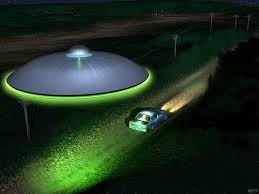
In the majority of close encounters of the 3rd and 4th kind the entities are frequently described as being anthropomorphic i.e. two arms, two legs etc. But many biologists believe this would be extremely improbable, given that our evolutionary path is the result of certain influencing factors such as the composition of our atmosphere, gravity, our distance from the sun, and many others. The suggestion, therefore, that there are countless other worlds whose characteristics match ours exactly, and whose inhabitants have followed the same genetic pathways and mutations as ours is, they believe, untenable. By applying such logic we reach the inescapable conclusion that it is the more outlandish entities that give credence and support to the extraterrestrial hypothesis.

Another stumbling (though not insurmountable) block for the ETH is the vast interstellar distances involved. Spacecraft capable of travelling interstellar distances are currently way beyond our technological skills. Even if we built a ship capable of travelling at light speed (300,000 km per second) it would take at least 100,000 years for it to travel from one edge of our galaxy to the other.

Milky Way Galaxy

However, advanced alien civilisations may have overcome this problem by using their advanced knowledge of the fabric of space-time. Theoretically, it is possible to travel faster than the speed of light. The four-dimensional universe consists of length, breadth, height and time. By manipulating or ‘bending’ space-time, so that the space behind you expands vastly and the space ahead of you shrinks or collapses, you arrive at your destination in literally no time at all.

There are literally dozens of recorded alien species alleged to be visiting our home world, but how many of them are genuine?  We have to take in factors such as cultural influences, hallucinations, hoaxes, mental aberrations, and mass hysteria – to name but a few.  Given the thousands upon thousands of reports from all around the globe, from all walks of life and cultures, this author finds it possible that at least a few of these encounters could be of genuine extraterrestrial biological entities (EBEs).

© David Calvert 2011

Update 12/5/16

Drake’s Equation Revised.

http://io9.gizmodo.com/what-a-brand-new-equation-reveals-about-our-odds-of-fin-531575395

Please note that at the bottom of each blog page there is a “Comments” box and a “Like” button, should you feel inclined to use them. Thank you.

ANALYSING ALIEN ABDUCTION SCENARIOS.

Analysis of  Alien Abduction Scenarios.
 David Calvert.

A typical account of alien abduction sometimes begins with the abductees experiencing restlessness, anxiety, and a premonition that something strange is about to happen.

abduction from vehicleIn vehicular abduction cases, the individual/s may also experience a subtle urge or prompting to be at a certain location at a certain time. The first indication of an imminent abduction often comes with their sighting of a UFO. In British cases it is commonly the black triangular or traditional silver reflective ‘flying saucer’ type. alien abductionThrough the use of various transportation techniques they are then removed from their terrestrial environment on to the waiting UFO by non-human entities. At this juncture subjects may experience a loss of memory. Once aboard they are invariably subjected to various physical tests and procedures, the main thrust of which is in the genetic experimentation area. The extraction of sperm and ovum are commonly reported, (although over the last few years there has been a noticeable decrease in these procedures), as are the removal or insertion of implants. Throughout the entire procedure the abductee/s experience a paralysis, assumed by many to be induced for the benefit of both parties. One of the beings – commonly reported as appearing taller and more caring than the others -is often referred to as a leader or liaison.
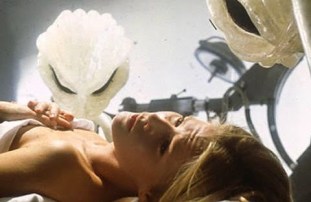
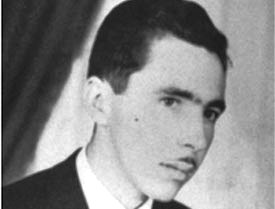
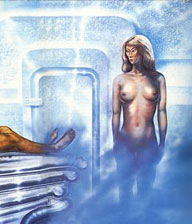
When the examination is completed they may be given a tour of the ship or attend a conference, in which they are shown cataclysmic images of the Earth’s destruction and a warning against certain human activities. Others experience being taken on an otherworldly journey and are shown a barren, devastated landscape or view a bright, lush landscape that seems enclosed or underground. The departure for many is sudden, again involving a momentary lapse of memory for some.

Some experience immediate or short-term symptoms in the aftermath of their encounters. These range from irritation of the eyes, to puncture wounds, dehydration and headaches, whilst others suffer intermediate and long-term after effects involving vague anxieties, sleep disturbances and, more frighteningly, additional abductions.Only a small minority of abductees see their encounters as being spiritual.

 From the above scenario it becomes abundantly clear that while some cases share certain commonalities, all do not. In this sense they are atypical. A closer inspection of several abduction cases will serve to identify some of these commonalities and differences.

 CASE HISTORIES

  [1940s – 1990s]

antonio villas boas

One of the earliest abduction cases reported was that of 23-year-old Brazilian rancher, Antonio Villas Boas. On October 14, 1957, both he and his brother witnessed a strange light that seemed to follow them around as they ploughed a field late that evening. Unsettled by the strange light, they gave up their work and went home.

         The following night the light returned. This time, Antonio was alone. The light drew closer to him and hovered. He uncoupled the tractor’s ploughing gear to head for home but found the tractor would not start. Without warning the light swooped to the ground a few yards from him and two small entities, wearing helmeted ‘space suits’ and breathing apparatus, emerged. They seized him and frog marched him into the UFO. Once aboard, they stripped him and smeared his body with a clear, odourless liquid. They then took blood samples from his chin. A quite remarkable event then took place.

boasA naked female entity entered the room. She was approximately 4 ft. 6 inches tall, had thin blonde hair, slanted eyes, high cheekbones and thin lips. Her seduction of Villas Boas resulted in their having sexual intercourse twice, before a robotic alien intervened. When she was called away, she pointed to her stomach and then the sky. Although he enjoyed the experience, he was somewhat repelled by the guttural barking sounds she made during the coupling. When his clothes were returned, he dressed and was taken around the ship and allowed to see what appeared to be a control room. He was later returned back to the farm.
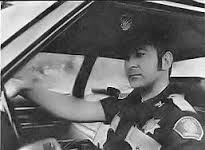


Herbert Schirmer.
Schirmer

In the early hours of December 3, 1967, at the junction of Highway 3 and 63 near Ashland, Nebraska, USA, patrolman Herbert Schirmer saw a football-shaped UFO on the ground. It was displaying red lights and was supported on tripod landing gear.

Following the sighting, his log showed 20 minutes of missing time he could not account for. At home a red weal appeared on his neck and he suffered from a headache and a buzzing sound in his ears that kept him awake. According to his testimony under hypnosis, he described encountering 4 ft. tall entities that emerged from the UFO and surrounded his patrol car. He tried to pull out his revolver, but was prevented from doing so by telepathically conveyed command. One of the aliens held a device that covered the car with a green light or gas. Another entity touched his neck, causing him pain. After being questioned by them he was taken aboard the UFO, which he was told worked by ‘reversible electromagnetism’. When he asked his captors if they were responsible for kidnapping people he was told that they had a programme known as ‘breeding analysis’ and that some humans were used in these experiments. This is probably the first overt reference in an abduction case to an alien genetic programme.

According to his testimony the aliens wore close-fitting, hooded, silver-grey uniforms with boots and gloves. The visible portions of their facial skin was grey-white, the nose flat, and the mouth a mere slit. They had slanted eyes with strange pupils that opened and closed like a camera lens.

Linda Cortile.

cortile

At the age of 41, Italian-American, Linda Cortile, a New York housewife, claimed that at 3am on November 30, 1989, she was approached by a ‘small grey-skinned alien’ while she lay in bed. She recalled her body becoming paralysed in the creature’s presence, although her recollection of what happened next was vague. She also remembered lying on a table having her back examined.

Under hypnosis, she recalled five entities taking her from her bed, describing them as being short, white and dark, with very intense black eyes that shone. She claimed they lifted her up and carried her to the living room window, where there was a very bright blue-white light outside. The creatures then floated her through the locked twelfthfloor window and levitated her into the belly of a waiting UFO, where there began the examination of her back, and right nostril. Before leaving the examining table she was questioned about her family.

What makes this abduction experience so different from others is the fact that an international diplomat allegedly witnessed it and two US government ‘agents’, who saw both her and her abductors float from the twelfth-floor apartment in a foetal position, bathed in a blue light. They then opened into a standing position, before disappearing into the UFO.

A greater revelation was yet to follow when in 1991 the two ‘agents’ suddenly recalled being on a beach with Cortile, seconds after she was abducted. In subsequent hypnotic regressions Cortile revealed that the aliens were using her to explain to the leading politician that humanity was damaging the environment and that they were also collecting sand samples for analysis.

Bud Hopkins, the case investigator, received a call from Cortile who claimed that around October 20, 1991, she awoke to find her face, bedclothes and pillow covered in blood. Fortunately, one week earlier an X-ray was taken of Cortile’s head that revealed a tiny, cylindrical, radiopaque object lodged up her nose. A second X-ray was taken sometime after her nosebleed and revealed nothing untoward. This led Hopkins to surmise that the aliens had removed it – hence the bloodstains on her bed.

Betty Andreasson Luca.

betty andreasson luca

This case is possibly one of the most important in the annals of the abduction phenomenon, because her experience began in 1944, when she was seven, and have continued ever since. Some of the abductions took place while she was alone, others included members of her family, including her husband and daughter. It is also interesting to note that Betty and Bob Luca’s abduction experiences have taken place in two different states of being. The first is a normal straightforward abduction. The second in an altered state i.e. Out of Body.

At around 7 p.m., on the night of January 25, 1967, Betty’s family home in Ashburnham, Massachusetts, was plunged into darkness and a diffuse pink light shone in from the kitchen window. Betty was already in a state of some anxiety, because her husband was seriously ill in hospital following a car accident.

When her father looked outside he saw small creatures that looked like ‘Halloween freaks’. When one of them turned to look at him, he felt ‘kind of queer’ and blacked out. When the lights came back on Betty saw her seven children and parents were motionless, as if in a trance. She watched, rooted in terror, as four entities, wreathed in a haze, entered through the locked back door. They were approximately 1.3 metres tall, were all dressed in skin-tight blue uniforms and had bulbous heads with almond-shaped eyes. Around 3 hours and forty minutes later, when the family finally ‘awoke’ from their torpor, only Betty and her father had the dimmest recollection of what had happened.

At the age of forty – some ten years later – she underwent a session of hypnotic regression and the full story of her encounter and, it emerged, her abduction was revealed. An astonishing story began to unfold in 1977 when Betty underwent her 14 sessions of hypnotic regression with Henry J. Edelson, and expert in the field. According to her account, and whilst her family were in a trance-like state, the tallest alien asked Betty to accompany them. She was also told they had come to help the human race, because they were in danger of destroying themselves. Then she was floated outside, where an odd looking oval craft with a raised central console was waiting.

Once aboard they began their examination of her and noticed that some of her body parts were missing; an observation she presumed referred to a hysterectomy she had undergone. A curious machine, like a cross between a camera and an eye, then began to examine her and a needle was inserted into her navel. She became acutely distressed. The tall alien apparently laid his hand upon her forehead and the pain was relieved. A device was then used to remove a tiny spiked ball from her nostril. It later emerged under hypnosis that Betty had, in fact, been abducted on several previous occasions and that the object was some kind of implant.

Following her examination she was removed to a ‘cylindrical room’ where she was put into one of eight seats resembling armchairs. Tubes were inserted into her mouth and nostrils and a translucent canopy was lowered over her. A grey liquid then flooded the capsule and she felt a spoonful of thick, sweet liquid being injected into her mouth, which had a tranquilising effect on her. She then experienced a series of pleasant vibrations and a temporary heaviness, as if the vessel was accelerating.  

When she emerged from the capsule a short while later, two hooded humanoids took control of her and floated her along a black track through a series of dark interconnecting tunnels. They eventually came to a mirrored wall and Betty, thinking they were about to collide with it, braced herself for the impact. Incredibly, however, there was no collision. When she opened her eyes she discovered the ambient air was ‘vibrating red’, as if she was being bathed in infrared radiation. Her journey took her passed strange looking buildings, across which clambered thin, ape-like creatures with suckers for fingers and two large eyes atop stalks rather than heads.

Soon after, she was taken into a place that she described as beautiful and green, like Earth. In the distance she could see cities with mighty domes. As bizarre as her encounters had thus far been, they were nothing in comparison to what next befell her.

Directly ahead a large object came into view, which was silhouetted against a bright phoenixlight. As it drew closer she realised it was a 4.5 meter tall statue of an eagle, which suddenly burst into flames. From the ashes arose not a fledgling phoenix but a thick, grey worm that communicated telepathically with her, saying, “You have seen and you have heard. Do you understand?” She replied that she could make no sense of it all. Again the voice spoke in her head; “I have chosen you … I have chosen you to show the world.”  
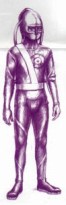
Another witness emerged in the early investigative stages of the affair. It was Betty’s daughter, Becky, who claimed that when the aliens arrived at their home she had briefly managed to shake off her trance and had glimpsed the visitors. She described them as being hairless, with pear-shaped heads, almond eyes, orifices rather than external nose and ears, and a slit-like ‘mouth’ typical of the Grey. Other features however did not fit this stereotype; the creature’s skin was clay-like, not scaly and instead of four long fingers they had three thick ones that were attached to club-like hands. They differed from Greys in other respects too. Betty’s physical examination, for example, was conducted without the disregard for pain, traditionally shown by Greys.

Listed below are just a few examples of the amazing account recalled by Betty and Bob Luca.

1949:

Five years after her first encounter, Betty experiences meeting an alien in some woods. The ball of light she experienced in 1944 was also present in the encounter.

1950:

Here, she was abducted from a field and taken to an underground area, where her eye was examined and removed. Eleven years later, 1961, she was drawn to some woods where she met an alien with a message.

1967:

See above detailed account.

1973:

During this abduction Betty witnesses alien technology and the birth of a foetus.Four years later an alien warns her of the impending death of two of her sons.

1978:

Both Bob and Betty are abducted from their car via an out-of-body experience, in which Betty is turned into a being of light and Bob is given information on life and death.

1984-89:

Further out-of-body and physical abductions take place. In the latter state is taken by a UFO to a place described as the ‘crystal forest’. From this place she is taken to a huge UFO above the Earth. Aboard this craft she witnesses, among other things, an operation to replace a Grey’s eyes. There are also Nordic-type aliens aboard the craft for whom, it is explained, the Greys work.

During a further OBE abduction she sees her daughter aboard the alien craft. She is apparently under instruction. Bob is abducted and is put on a table. A device is fitted to his head and he sees symbols in his mind.

1992:

Bob sees an alien Grey in their house.

Carlos Manuel Mercado.

In his home in Cabo Rojo, Puerto Rico, Carlos Manuel Mercado claimed to have been visited by three aliens he described as being like the traditional ‘Greys’, except they had bumps on their facial skin. They wore one piece, tightly fitting, sandy coloured fitting suits and communicated with him via telepathy. The year was 1988.

He was abducted from his home onto a domed, disk-shaped craft in which he saw more smaller beings and a taller entity, approximately 5 ft. 9 inches tall. This entity was dressed in a white robe and looked a little more human than the others. After he assured Carlos that he would come to no harm, the craft took off and headed toward Sierra Bermeja, a few miles distant. As he watched through the portholes he saw they were approaching the El Cayul Mountain. He then saw a brilliant light when something opened up and the craft went inside through a kind of tunnel and into a large cavern that was brightly lit and appeared to be constructed of aluminium.

After disembarking from the UFO, Carlos was told by the tall alien that he was going to show them how advanced they were. He saw a barrack-like structure, hundreds of aliens assembling machines, and many crafts of varying design. “As you can see”, the tall entity told him, “We have a base here for the maintenance of our crafts’ systems. We have been here for a long time and don’t intend to leave.” Carlos was also told that they meant no harm to Earth people and that they were not here as conquerors. They merely wanted to reach out to establish a direct relationship that would be beneficial to both parties.

 Carlos could not understand why he had been chosen, as he was a simple man, whom no one would believe. The tall alien replied, “People will hear you, as well as many others we are contacting and bringing here to show them the same. When (educated) people hear what simple people – as you call yourself – are saying they will know that you are telling the truth.” He was then returned home.

Author, Timothy Good also relates a story of someone taken to the alien facility. In this instance he was a high-ranking military officer. Interestingly, everything the officer said corroborated the details given by Mercado.

Common Themes and Differences of Purported ET Abductions.

 Alien Types:

In seeking to categorize the phenomenon, Thomas Bullard’s classification scheme (1995) shows a divergence in the descriptions offered by abductees of their non-human captors, who range from short grey (standard) humanoids to apes, robots, Nordic-types, and other assorted oddities. These we find in abundance in the previously cited cases. Some, as in the Luca case, are exotic in the extreme and do not even appear in Bullard’s classification.

Even the traditional Greys appear to display disparate features. Some are reported as having intense, black eyes that shine. Others posses almond-shaped eyes (Luca), whilst others have slanted eyes with odd pupils that open and close like a camera lens (Schirmer). Becky Luca, we may recall, also described features that did not fit the Greys’ stereotype; their skin texture and the numbers of hand digits being appreciably different.

In a later abduction her mother, Betty, also reported seeing Nordic – type aliens.

The so-called Greys in the Mercado case were also unusual in that they had bumps on their facial skin. He also reported seeing a taller entity dressed in a white robe. A Nordic type perhaps?

boasPage1

Antonio Villas Boas was unable to offer a detailed description of his captors, because they wore helmeted ‘space suits’ with breathing apparatus, suggesting an inability to breathe our atmosphere. Yet, the naked female he encountered wore no such breathing apparatus. Nor did the Schirmer, Cortile, Luca and Mercado entities, though they did wear similar outfits. Of the five cited cases, only Boas describes a robotic alien.         

Abduction Methodology.

In 1995, 57% of abduction cases reportedly took place from bedrooms, whereas reports of abductions from vehicles were 26%. Whatever the location, the transference methods employed suggest different technological skills and capabilities.  In the case of Betty Andreasson Luca, a beam floated her to the waiting craft. This also happened to Linda Cortile who, like Luca, also experienced the nullification of the nuclear repulsive forces when she was physically passed through a locked window. Villas Boas was physically manhandled into a UFO and it can be reasonably assumed – given Schirmer’s description of an open hatchway – which he too entered in a similar fashion.

The use of such disparate technologies and alternate abduction methodologies can hardly be described as typical; especially the Out of Body (OOB) abductions experienced by Betty Luca.

Bullard’s classification table shows telepathy to be the favoured method of communication, showing little deviation over an eight-year period from 1987 – 95. This is certainly true in the Schirmer, Luca, and Mercado encounters. In the case of Villas Boas, however, who claimed to have had a sexual encounter with an alien female, communication allegedly took place via hand gestures, barks and yelps. 

A further distinction is evidenced in the manner abductees are treated by their non-human abductees. Some report them as being warm and considerate, as in the Mercado and Luca abductions, whereas Boas – who was frog marched into the craft experienced a military-like protocol. They were also cold and, as with Linda Cortile, behaved in a business like way towards him. Schirmer found them to be coercive and controlling and believed them to be insincere and uncaring, one of his captors going so far as to cause physical pain and injury to him.

A common theme that runs through many abduction cases is that of memory loss. The Luca family’s conscious memories of the events were fragmented and made little sense until they underwent regression hypnosis and began to recall in greater detail their abductions. The same appears to be true of Linda Cortile, Herbert Schirmer and Villas Boas. Had they all been given instructions by their captors to forget?

It is worth noting at this juncture that many ufologists distrust hypnotic regression as a tool for eliciting memory because of the highly suggestible state the patient is placed in. What may have been a dream or a temporary mental aberration can become a subjectively real occurrence in the mind of the patient in their altered state. It is of vital importance that the practitioner be fully qualified in this discipline when dealing in cases of supposed abduction so as not to create a ‘false memory’.           

In 1995 it was reported that 68% of abductees undergo a ‘standard’ medical examination which may or may not involve blood being taken; samples of genetic material being removed; a reproductive examination; and the removal or insertion of implants. Given that these procedures do occur, they are by no means a guaranteed feature as the Boas, Schirmer, and Mercado contactee cases demonstrate, although Boas and Schirmer do seem to have been involved in some kind of breeding and ‘breeding analysis’ programmes.

Conversely, Linda Cortile and Betty Luca do undergo medical examinations. In Cortiles case her back and right nostril is examined. This was done manually, as reported by 42% of abductees in 1995. In line with 24% of reported medical examinations done by aliens, Luca is given a reproductive examination and, as with Cortile, a probe is inserted up her nose. Seventeen years previously her eye was also examined and removed.

In 1987 Bullard’s classification table reported that 49% of abductees were examined by an eye-like device, a procedure also experienced by Luca. However, it was in 1989 that Betty witnessed the most unusual medical procedure. It was performed not on herself but on a Grey, who had its eye replaced.

We can only speculate as to why diverse and intrusive medical procedures are being performed. However, it is worth noting that reproductive function and development is of particular interest to these creatures. Why else would they extract sperm and ova or retrieve developing foetal material?

According to Joe Nyman this is the most variable of all abduction stages. Of the above-cited cases only one, Cortile, isn’t given a tour. Boas and Schirmer tour their captors’ ships and witness various technological devices. Similar events were likewise reported by 28% of abductees in 1995. Carlos Manuel Mercado visits an underground alien facility where he sees hundreds of aliens maintaining crafts of various design.

The Betty Andreasson Luca case is, however, the most intriguing of all. Over several alleged abductions she has witnessed alien technology and the birth of a foetus, claims to have gone on two otherworldly journeys in 1967 and 1989; and even alleges abduction in an Out-of-Body state. The latter notwithstanding, the tours in themselves are a relatively common theme. But it is in their content and the messages they purportedly convey that disquieting differentiations are to be found. These might or might not be the result of wholly separate extraterrestrial agendas.

In 1987, 71% of abductees reported experiencing after-effects on a short-term, intermediate-term, and long-term basis. Interestingly, Mercado and Boas did not. Although a medical examination of the latter did show that he had been exposed to radiation, he merely told his story and retreated to his daily life.

Herbert Schirmer showed both short and long-term after-effects, the latter taking the form of severe headaches.

Linda Cortile was suspected as having undergone a further abduction to remove an implant when she awoke one morning to discover dry blood on her face and bedclothes.

Betty Andreasson Luca is experiencing on-going abductions and has developed physical scars, thought by some to be due to cell sampling carried out by her abductors. She continues to regard the abductions as spiritual experiences.

Whether such abductions are real, imagined or are the product of mental aberrations, it is still hotly contested in ufological circles and will continue to be so in the foreseeable future. One thing they are certainly not is typical.

 References.

Evans, Hilary & Spencer, John (1989): Phenomenon Futura Publications.
OCN Ufology (2000): Unit 4: Alien Abduction.
The Contactee Era. Brookesmith, Peter (1995):
UFO The Complete Sightings Catalogue: Abductions and Absurdities. BCA.
OCN Ufology (2000): Unit 4: Alien Abduction: The Abduction Phenomenon in the 1960s.
The X Factor, issue 47 (1997): Abduction at Brooklyn Bridge. Marshall Cavendish Ltd.
OCN Ufology (2000): Unit 4: Alien Abduction.
The 1980s: Part 2. OCN Ufology (2000): Unit 4: Alien Abductions. The Andreasson Case.
The X Factor, Macdonald, Andrew, Issue 47 (1998): The Emissaries of God?
Good, Timothy (1998): Alien Base. Century.
Bullard, Thomas (1995): OCN Ufology: Unit 4: Alien Abduction. Characteristics of the Phenomenon.
Butler, Richard D (1997): Abduction Experience [AE 4] Classifications.
OCN Ufology. Unit 4: Alien Abduction.
Brookesmith, Peter (1995): Contact. The Complete Sightings Catalogue.
Nyman, Joe (2000): Stage 4: Reassurance, Positive Feelings, A Sense of Source and Purpose Given.
OCN Ufology. Unit 4 (2000): Alien Abduction.

Please note that at the bottom of each blog page there is a “Comments” box and a “Like” button, should you feel inclined to use them. Thank you.


MOONSTRUCK

MOONSTRUCK
An examination of the Moon landings conspiracy theory.

David Calvert

On Sunday evening of July 20, 1969, Neil Alden Armstrong ensured his place in the history books as the first man ever to set foot on the surface of the Moon. Almost from the outset this monumental achievement became dogged by rumours of a conspiratorial cover-up that persists up to the present day. But what evidence is there to support the conspiracy theorists’ arguments that man never went to the Moon, and that the entire scenario was carefully stage -managed by NASA? To reach any kind of conclusion as to whether there is any kind of validity to their arguments, we must first examine the evidence put forward in support of their long-held viewpoint – beginning with the Van Allen Radiation Belt.

The Van Allen Radiation Belt.

radiation Belts.jpg


The radiation belt comprises of an inner and outer belt of energetically charged particles trapped by the Earth’s magnetic field. The inner belt is concentrated mainly around the Earth’s equatorial plane and extends over altitudes of 650 – 6,000 km. Its radiation is strongest between 2,000 and 5,000 km, and fluctuates in intensity with the solar cycle. The outer belt has an altitude of approximately 10,000 – 65,000 km, and is strongest from 14,500 – 19,000 km. It is through these lethal radiation zones that the Apollo astronauts had to fly to reach the Moon, leading many sceptics to speculate that in order to do so their spacecraft would require so much shielding to protect them from the fatal radiation doses that they would barely manage lift-off velocities, let alone journey to the Moon. However, the time the astronauts spent in these regions of space was minimal, and they received only 1% of a fatal dose, showing that whilst the belt is an obstacle to space flight it is not an insurmountable one.

Photographic Anomalies

The bulk of the conspiracy theorists’ arguments come in the form of photographic evidence, such as the one above, taken during the Apollo 11 mission. Image analyst,shadow lengths and professional photographer, David Percy has noted that in this shot of Neil Armstrong and Buzz Aldrin the shadows appear to differ in length. Armstrong’s shadow is appreciably foreshortened. Since light travels in straight lines, and should not create unequal shadows, how can this be so? The answer to that question lies in a simple experiment.
Shadow Experiment.

Take a clean sheet of A4 paper. On it make two marks relative to the positions of the astronauts in the above image. Place two equally sized objects onto these marks. Position a static light source, such as a reading lamp, so that the objects create long shadows. Next, mark the point where these shadows end. Remove both objects and measure the distance between your position marks to the shadow end marks. They will be of equal length. Now reposition the objects onto their original marks and this time take hold of the sheet at the end furthest from the light source and carefully push it towards the light, making sure that the opposite end doesn’t move. This should create a hump in the sheet. You will note that as the hump draws close to the object furthest from the light its shadow foreshortens, whereas the shadow closest to the light does not, thereby demonstrating that the terrain over which it is cast creates shadow foreshortening.

It can be safely assumed from this simple experiment that the terrain behind Armstrong has a slightly raised elevation, and it is this that is causing the difference in shadow lengths. Note the appearance of the soil in the top left quadrant in the photograph. It appears lighter than the mid to foreground region, as one would expect of a raised mound being struck by sunlight at a less oblique angle. There is absolutely no reason to believe that the unequal shadows were created by two separate light sources, such as studio lights, as the conspiracy theorists would have us believe.

As a further example on the theme of light and shadow, take a look at the following image.

aldrin shadow

This image of Buzz Aldrin shows the sunlight streaming across his left shoulder. His right side should be in deep shadow because the contrast of light and dark is more pronounced on the Moon. NASA’s explanation for this is that the sunlight is being reflected off the surface onto the suit. Hoax theorists, however, claimed that Aldrin contradicted this explanation when he said there is no refracted light on the Moon, thereby supporting their contention that another source of light (i.e. studio lighting) was responsible. In fact, both statements are true and are not diametrically opposed.

How so? Though the words refraction and reflection sound similar, there meanings are entirely different. Refraction occurs when light passes through a transparent material. Whereas, reflection occurs when it bounces off an opaque material. For light to refract it must pass through a medium different from the one it was travelling through. In space light travels at 100% because there is nothing to impede its progress. Its speed is reduced to 99.7% when it travels through air, and is further reduces to 75% when it travels through water. Because light waves slow down when passing through a denser medium, they bunch up. That is why if you place a pencil in a glass of water it appears to bend. Therefore, as there is neither air nor water on the Moon, refraction cannot occur. It was this phenomenon of refraction to which Aldrin had alluded, and not reflection.

Note, too, the fall-off areas in the Aldrin photograph. Because the Moon has no atmosphere to pollute the light, hoax theorists claim these areas should be bright and crisp and not gradually fade into darkness. This so-called ‘anomaly’ is due to simple optic and lighting effects, however. The mid-to-foreground surface regions are being viewed from a different angle than that of the distant background surface. As Armstrong is focussing specifically on Aldrin in this shot the background naturally appears out of focus. The local terrain and light from the lunar module, which is situated to the left of Aldrin, also reflect significant amounts of light, as evidenced by the illuminated area directly behind him.

The Case for Shadow Divergence.

divergence

Sceptics claim that the divergence of the shadows in the above image is impossible if the sun is the only source of light on the Moon. ‘Surely’, they argue, ‘the shadows must fall in the same direction?’ This, they believe, is proof positive that another light source is being used. Not so! This is yet another terrain effect caused in this instance by ground slant, as the simple experiment below demonstrates.

shadow05

Note the shadow effect evidenced in this experiment. Each of these shadows is cast by a single light source. The model LEM in the background, and the marker pen in the foreground, serve as shadow controls showing the directions shadows take on nonslanted ground terrain. The shadow cast by the model rock runs in a different direction due to the ground slant over which it is cast.

Helmet Reflection.

helmet reflection 2

The reflection circled in red on Aldrin’s helmet above is considered by many conspiracy theorists to be either a helicopter or a metres-tall glass structure of some kind. Even under greater magnification this object does not resolve itself into an identifiable body. How then have the hoax theorists managed to come to their conclusions? In actuality what is being reflected in the visor is nothing more than the American flag. To its left is the Solar Wind Collection experiment. This was determined by the positions of the two astronauts relative to the objects and the lunar module reflection on the right of the visor. The reason that the flag and the SWC seem so far away is due to the convex, spherical shaped visor that makes objects appear further away than they really are.

The Cross-Hair Anomalies.

crosshair


The reflected light phenomenon is also responsible for the cross-hair anomalies as seen in the above image, taken during the Apollo XVI mission. The cross hairs appear on all lunar photographs and appear on the glass plate between the shutter and the film, making it impossible for them to appear behind the image being photographed. Empirical studies have shown that it is conceivable that the bright reflected light bouncing off the Lunar Rover Vehicle’s antennae has obliterated the fine line of the cross-hair in this image, making it look as if it is behind the antennae.

The ‘C’ Rock.

C rock anomaly

The above image is taken from the same photograph as the antennae image and shows what appears to be a rock  with the letter C imprinted on it. Is this, as conspiracy theorists have speculated, an identification letter left on a studio prop? It is worth noting at this juncture that the image is a 3rd or 4th generation copy of the original, in which the letter does not appear (see below), suggesting it is an artefact accidentally introduced during one of the many scans of this print. It could be something as innocuous as a piece of lint or hair.

C rock first generation print

 Radioactive Fingerprints.

The rocks brought back by the Apollo astronauts weigh in at 32 kg. When they were analysed by geologists they discovered several differences between them and Earth rocks. Some contained more iron, magnesium, and titanium, but less silica and aluminium. Some samples were found to contain higher levels of radioactivity than Earth rocks. Dr. David McKay, Chief Scientist for Planetary Science and Exploration at NASA’s Johnson Space Centre (JSC) is a member of the group that oversees the Lunar Sample Laboratory Facility at JSC. Here is what he had to say on the Moon rock controversy: “They differ from Earth rocks in many respects. Just as meteoroids bombard the Moon so do cosmic rays, and they leave their fingerprints on Moon rocks, too. There are isotopes in Moon rocks, isotopes we don’t normally find on Earth that were created by nuclear reactions with the highest energy cosmic rays. Earth is spared from such radiation by our protective atmosphere and magnetosphere.” He adds, “Even if scientists wanted to make something like a Moon rock by, say, bombarding an Earth rock with high energy atomic nuclei they couldn’t. Earth’s most powerful particle accelerators can’t energise particles to match the most potent cosmic rays, which are themselves accelerated in supernova blast waves and in the cores of galaxies. Indeed, faking a Moon rock well enough to hoodwink an international army of scientists might be more difficult than the Manhattan Project. It would be easier going to the Moon to get one.”

He goes on to say, “Researchers in thousands of labs have examined Apollo Moon samples – not a single paper challenges their origin! And these aren’t all NASA employees either. We have loaned samples to scientists in dozens of countries, who have no reason to cooperate in the hoax.”

Footprint and Tyre Track Anomalies.

The lunar surface is covered in a fine dust that the astronauts likened to ‘talcum powder’. These easily compacted dust particles are actually micrometeorites, Laid down since the Moon’s formation 4.5 billion years ago. It has been argued that as the Moon has no moisture clearly defined tracks and footprints made by the astronauts should not exist. This argument is borne from a false premise, which the reader can easily dispel by spreading dry talc, or any other like medium, onto the surface. As you will see, any imprint you make will be clearly defined. Also, if the Moon landings were faked in a dry Earth desert terrain, as has been maintained, then any tracks laid down in the sand would lack the definition of the lunar tracks because dry sand, as well as being coarser, does not compact easily.

The Fluttering Flag Anomaly

flag1

Cited as indisputable evidence that the Moon landings were faked on Earth is the fluttering American flag planted by Aldrin and Armstrong. On a non-atmospheric world there can be no breeze to cause such a motion. How, then, is the flag seen to flutter?

On Earth a flag is designed to be blown into position by the wind. As there is no wind on the Moon the flag would simply hang limply down, and so an extendable rod was incorporated into its design to combat this problem. The unnatural rigidity along the top of the flag is evidence of this. The rod simulates a wind- blown, ripple effect because it is not fully extended. Surely, if an errant breeze was to blow through a film set, causing the flag to wave in what is supposed to be a vacuum, at least one of the film crew would have noticed such an obvious fact and they would simply have done another take! And wouldn’t experts have been employed to oversee such glaring inconsistencies in the first place?

Some video clips purportedly show the flag waving in the breeze after it was planted. Untrue! The only time the flag is seen to flutter is when the astronauts are planting it into the lunar surface. The movement of the flag was caused by the back and forth rotation of the pole in order to get better penetration into the lunar surface. As there is no atmospheric resistance the flags motion takes a while to dampen down. There is no evidence, whatsoever, showing the flag moving when the astronauts are not holding it. a fact that hoax theorists never mention.

The Hasselblad Space Camera.

a11-hass10

 For the purposes of this article we will concentrate on the camera used on the Moon’s surface – the Hasselblad 500 EL Data Camera (HDC).

The midday sun on the Moon ranges from 260° – 280° F. At those temperatures, sceptics claim, film would crinkle up into a ball. However, to combat this problem the lunar landings and subsequent explorations were conducted when the sun was low, so that temperatures were actually quite moderate. The camera films were kept in magazines with a silver finish, thus providing protection from the temperature extremes. The camera, too, is silver coated to protect it from thermal variations, thereby maintaining an internal uniform temperature.

When camera film is wound on the resultant static electricity generated onto the surface of the film can cause unpleasant patterns to appear. This static build-up is normally dispersed by the metal rims and rollers that guide the film and, in an Earth environment, by the air humidity. How then, as the HDC was used in the vacuum of space that has no humidity and employs a glass reseau plate that is a non-conductor to move the film on, was the film not seriously damaged by the resultant build-up of static charge?

To overcome this problem the side of the reseau plate facing the film was coated with an exceptionally thin conductive layer that is led to the conductive parts of the camera body via two contact springs. Two projecting silver deposits on the conductive layer affect contact. Problem solved.

The Absence of Blast Craters.

Antares

To set down safely on the lunar surface the LEM had to give out 3,000 pounds of thrust to slow its descent that would have created a massive hole beneath it but according to sceptics, in pictures of the Lunar Excursion Module the ground appears untouched. Is this evidence of fakery? No. There are many photographs showing radial disturbance of lunar soil (regolith) given out by the engine blast. The image of the Antares module above, for example, shows a blast crater beneath the descent engine, as the image below clearly shows.

blast crater

You might think that 3000 lbs worth of thrust would leave a much bigger crater than that seen here. In an Earth environment that would be the case as the air in our atmosphere constrains the rocket thrust into a narrow column, thus creating a lot of pressure. In a vacuum, however, the exhaust is spread out considerably more, thereby lowering the pressure and making it much gentler. If we apply a little math you will see what I mean. The engine nozzle is approximately 54 inches across, which gives it an area of 2,300 square inches, which equates to only 1.5 lbs per square inch of pressure. Not excessive by any means.

Why Create a Hoax?

It has been speculated by many hoax theorists that one reason for NASA hoaxing the Moon landings was because people were unhappy about the horrors taking place during the Vietnam War. In order to take their minds of these atrocities, and deflect the public outrage toward the Government, NASA hoaxed the landings. We are further invited by the disbelievers to check certain dates. The US, they claim, abruptly stopped going to the Moon around the same time the Vietnam War ended, because the deception had fulfilled its purpose. They would have done well to have checked these dates a little more closely themselves. There was nothing abrupt about the discontinuation of the Apollo Moon landings whatsoever. As far back as the first Apollo landing in 1969 – when the Vietnam War was still years away from cessation – plans were already in the offing to end the programme. What is more, the Apollo mission was initiated more than four years before the conflict in Vietnam was even considered to be a war.

Another reason often touted for the faked landings is that Russia and the US were involved in a heated battle to see who was the better of the two superpowers. The US, fearing they might lose the space race and lose face, then set about their deception. Does it seem credible that the Russians would simply hold up their hands and say ‘Okay, we give up. You win.’, when it would have been far easier to discredit the Apollo missions if they were truly being faked? Hardly. Had they the slightest inkling that the Moon landings were faked the Soviets would have exposed it. Instead they tried to cover up their own failed attempts at putting a man on the Moon by claiming they were not even trying to do so – a fact that we now know to be untrue. They had a very aggressive manned lunar programme.

Conclusion.

In 1994 an article was published in the Fortean Times that stated: ‘. . . mankind has no proof at all that we ever set foot on the Moon, other than the photographs that NASA elected to publish.’ A bold, but false statement. We have the testimonies of those who went there, of those thousands of individuals who played their part in getting them there, the photographic evidence, the rock samples, and the video and audio evidence are all overpowering proofs. None of the so-called ‘anomalies’ presented by the Apollo sceptics as clear evidence of a gigantic conspiracy stand up to scrutiny. On the contrary, they highlight an ignorance of scientific principles, a lack of critical thinking, sloppy research, and omission of facts that run contrary to their cherished beliefs. To date, the conspiracy community, regarding the Moon landings, has produced no irrefutable evidence.

Conversely, NASA have recently released new images from the Lunar Reconnaissance Orbiter (LRO) that show quite clearly several of the Apollo landing sights from orbit that shows not only footprints and tyre tracks, but also the paraphenalia they left behind.

Apollo 11 Landing Site

orbital photo of Apollo 11 landing site


This image shows tracks left behind by the lunar roving vehicle (LRV), and foot tracks left by the astronauts.

It is true to say that this article is by no means a thorough and exhaustive examination of the conspiracy theory. To do it justice would have resulted in a tome of many thousands of words, which I leave to those more qualified to do. However, I trust it has brought to the readers’ attentions the cautionary note that it is wise to question what the experts tell us and not accept blindly what they say. But that it is equally as wise to question those who question the experts. If, however, you still maintain that man has never set foot on the Moon, then perhaps I could interest you in a bridge I have for sale.

Neil Alden Armstrong was the command pilot on Apollo XI and was the first man to step foot on the Moon on the Sunday evening of July 20, 1969. He famously said, ‘That’s one small step for a man, one giant leap for mankind.’ In total he and Aldrin spent 22 hrs on the Moon.

neil rmstrong


When Buzz Aldrin was asked during an interview how he felt about claims that he and Armstrong never went to the Moon he replied, ‘Well it’s a waste of my time. Idon’t have much respect for the people who entertain that thinking and generally am not interested in engaging in any discourse with them. All that does is encourage them and it’s not going to change their thinking at all.’

buzz aldrin

© David Calvert 2011

 Please note that at the bottom of each blog page there is a “Comments” box and a “Like” button, should you feel inclined to use them. Thank you.

MIND’S EYE.

MIND’S EYE 

David Calvert

The coroner’s ‘accidental death’ verdict had done nothing to assuage Sam Phelps’ conviction that his mother’s untimely demise was as a direct result of suicide, and that the brutal, mental indignities she had endured at the hands of his sadistic father were the cause of it. Nor was the teenager under any illusion as to who would be the target of his father’s perverse attentions now she was out of the way.

With cold dispassion he peered into the open grave, his gaunt expression betraying little of the contempt he harboured for its occupant; a weak and foolish woman, a congenital victim, woefully incapable of withstanding the harsh realities life had apportioned her.

coffin 2

He mocked inwardly at the pathetic soul now being laid to rest. ‘God, how dumb could you be? Didn’t it ever once enter that addled brain that the sick son-of-a-bitch is incapable of even the slightest degree of affection?’

He looked out across a sea of faces assembled at the graveside and was met by the cold and steady gaze of his mother’s tormentor. Unlike her, Sam was under no illusion that some shred of decency still inhabited the man. It was a belief that had served him well, and which had protected him from the mental cruelties Victor had visited upon him in the past. Love and affection, he had learned, were weaknesses to be exploited. Any emotions that threatened to expose this weakness, therefore, were swiftly subjugated. They were, after all, Victor’s very life blood; the perversity from which he took his pleasure.

Mercifully, the time-worn platitudes of the ageing priest came to an end. Sam picked up a handful of earth and threw it casually into the open grave and turned to leave.

A brawny hand clamped onto his shoulder. “And where do you think you’re off to, boy?” Victor asked.

His pretext that he promised his aunt he would visit after the service, because she had been unable to attend owing to illness, was met with suspicion. Victor had no recollection whatsoever of the boy having mentioned it to him, though what with the funeral arrangements and all it was possible it had slipped his mind. Reluctantly, he gave his consent and cautioned his son to return home at a reasonable hour – a warning Sam knew was not to be taken lightly.

An overriding sense of purpose urged Sam on past his aunt’s cottage and beyond the environs of the village. Ill though she was, he saw little use in calling in on the retired psychologist, since her usefulness had long outlived its purpose. The doting, old bird had never once suspected the true reason for his visit earlier that month, hadn’t even noticed the missing book he had taken from her study. Within its pages lay the means of assuaging his all-consuming hatred for his father and the terrible nightmares that had plagued him from infancy.

Although he knew what violence he would like to do to his father, Sam was under no illusions that he was capable of such an act. However, Through hypnotic access to his mind’s most frenetic imaginings he would learn to commit with impunity in his dreams what he feared he was incapable of doing  in reality.

tor 2

On the bleak and inhospitable outcrop of Maelon Tor an age-old shepherd’s lean-to played host to the enterprising young thief. A warming fire burned beneath its single-pitched roof, illuminating the pages of his ill-gotten book. He paused momentarily to rekindle the dying flames, only to realise that dusk had settled in around him. The hour was late and he knew full well that his absence from home carried a heavy price – though what form it would take was open to question, given the Machiavellian nature of Victor’s mind.

Fearing his father would be scouring the streets for him, Sam skirted the village via the old drover’s lane, his pace slackening appreciably as he neared the rear of the house. Unlike the ground floor view, which lay hidden behind a high stone wall, the upper storey was clearly visible. Gratified that no discernible light could be seen from its windows he opened the ponderous oak gate and peered through into the garden. The entire place was in darkness.

Inching his way up the gravel path towards the back door, he caught sight of something glinting in the moonlight. There, snaking its way across the lawn and round the gable, where it was ultimately lost from view, was a streamer of magnetic tape. Puzzled as to how it had gotten there, he followed its path and came upon the glowing embers of a dying fire. Scattered around its edges lay the charred remains of his most cherished possessions.

His father’s latest act of attrition stripped him bare of the complacency that had lulled him into the false sense of security that had cost him so dearly. It was a wake up call. The few things he held dear in his life, his music, his books, and assorted role- playing games, had been consigned to the flame.

Victor peered down from behind a second storey window, watching, patiently waiting, and gloating in the night shadows.

Experience had taught Sam that physical confrontation with his black- hearted father was ill-advised. He still bore the scars from a previous encounter when, at the age of eight, Victor had forced him to drown his beloved pet kitten for having soiled the drawing-room carpet. The hapless creature had struggled frantically to escape the icy waters of the rain barrel, tearing the flesh from Sam’s arms and wrists. In the end it was Victor himself who finished the job. Hauling the tiny, sodden, creature up by its hind legs, he smashed its skull against the barrel.

The livid scars served as a permanent reminder to Sam just how inhuman his father could be. But some wounds ran deeper, were less obvious. Left unattended they had become a cankerous growth that time alone could no longer dispel. His ardent hatred of Victor raged within him. Soon it would find release in the deepest recesses of his mind.

dice1An inveterate gambler, Victor would often drive into the city at weekends to indulge his passion. This involved a considerable journey of some hours, affording Sam ample opportunity to put into practice all he had learned. At the eleventh hour, however, the elements themselves seemed ready to conspire against him. A menacing storm front was creeping in from the north and, for a while, it looked as though Victor might cancel his customary visit into the city. Awaiting the old man’s final decision, therefore, was more than Sam felt he could endure, his frayed nerves having reached maximum breaking point long ago. But habituation and addiction were potent forces to be reckoned with, and Victor’s defiant announcement that neither God nor the elements were going to prevent him from making his usual rendezvous came as a welcoming relief to the teenager.

Less than fifteen minutes had elapsed since his father’s departure and Sam was already feeling the effects of his auto-hypnotic induction, the incessant tick-tocking of the metronome sounding the passage of time as he gradually drifted deeper into an altered state of consciousness. Step-by-step he gave himself up to the soporific beat, his consciousness sinking inward to the synchronous pulse of his heart until, at length, even this last, tenuous link between reality and dream-state was relinquished and the gentle stirrings beneath his eyelids heralded the onset of his fantasy.

He looked about as the shadowy perceptions of his dreamscape gradually fused and blended into a cohesively familiar scene. He scanned the room for the tell-tale signs of surrealism that frequently inhabited his naturally occurring dreams. Nothing was amiss. All was as it had been prior to sleep. Elated by his god-like capacity, he felt that there was nothing to which he could not now aspire.

The sound was indistinct at first, an out-of-place grating that encroached upon the dreamscape. It grew louder and more defined with each passing second until there was no mistaking its source – a latch key! Someone in the real world was entering the house.

He awoke with a start. Dazed and confused, and in a blind panic, he leapt from the chair and made a beeline for the dining room to replace the disengaged telephone receiver. The last thing he had wanted was to be disturbed at some crucial point in his experiment. His caution, it now seemed, was going to be his undoing.

Catching him in mid-flight, Victor bellowed, “What the hell’s going on? And what’s the bloody phone doing off the hook?”

Sam’s only reply was an ineffectual stammer, which Victor was in no mood to hear. A stinging backhand sent Sam reeling against the wall, a second blow glancing off his temple before he could regain his senses. Vivid flashing lights burst before his eyes as a searing hot pain ripped through his skull. He sank to his knees and cowered like a whipped pup, certain that a further barrage of blows would follow.

“Get the fuck up!” Victor snarled, crimson faced and hauling him to his feet. “Now,” he demanded, “either you tell me what the hell you’re up to or I beat the shit out of you. Which is it going to be?”

No matter what he said or did Sam knew a good beating was on the cards and braced himself for what was to come.

Outside, a car horn blared and a voice called out impatiently, “C ‘mon Vic! At this rate the casino’ll be closed before we get there!”

His strangle hold on the teenager eased. Pushing him against the wall and stabbing him painfully in the chest with his finger he threatened, “I don’t have time for this now, but you can be damned sure it isn’t over yet. Now get the hell out of my sight before I change my mind.”

Picking up the wallet he had absent-mindedly left behind, he took his leave.

That night Sam brooded in the darkness of his room, forlorn images of his childhood firing across the synapses of his fevered brain, his mind caught up on a maelstrom of internecine rage and murderous desire. The pain in his temple was beginning to recede. He felt groggy and his eyes were leaden. The time had arrived to enter into his dreamscape before his father’s return.

He was not alarmed, sometime later, to find himself standing at the foot of the stairs with a large kitchen knife in hand; this much he had planned. The distant rumbling that rolled across the night sky and the intermittent flashes of brilliance radiating from the turbulent thundercloud overhead were, however, not of his making. They had come unbidden into his dream, as if by some unconscious directorship. The uncertainty of it thrilled him in a way he had never know and he threw caution to the wind, allowing himself to be carried along on a current of hypnotic indeterminacy.

A bolt of scintillating light crackled earthward, chasing the shadows from Victor’s lightningroom. In that briefest of moments Sam caught sight of his prey. The ridiculous sight of his pot-bellied father slumped naked across the bed, his flaccid prick poking out from between his thighs, brought Sam to a halt. Divest of his fatherly trappings, Victor presented an altogether sad and comical figure, an absurd antithesis of the fear inspiring monster he knew and loathed.

He inched closer to the bedside, the breath he had held in check suddenly bursting from his tired lungs.

Victor stirred and Sam’s heart almost erupted from his chest.

What was he afraid of? There was no way his father could hear him, unless he himself willed otherwise. He drew nearer, the lethal blade poised to strike. Then the moment was upon him, the blade driving deep into unresisting throat tissue. In a single stroke he  severed the windpipe and carotid artery.

Victor’s eyes sprang wide in bemused horror. Like a fish out of water his mouth opened and shut mutely. He grasped futilely at the obscenely gaping wound to stem the crimson fountain that hastened his end as Sam looked on, his face a mask of psychotic amusement.

Sam had never seen so much blood, but he knew this was how he had imagined it and so it was. Rivulets of the stuff coursed down the walls and dripped from the ceiling onto the bedspread where Victor writhed in the final paroxysms of agony. It was all Sam had wished it to be.

Though all too brief, the encounter had proven extremely gratifying and Sam felt somewhat reluctant to return to the banal existence that awaited him in the real world. Nevertheless, he found consolation in the knowledge that there would be other nights and other scenarios to explore. Nothing was beyond him now.

Initially, he was not overly alarmed at his seeming inability to end the auto-hypnotic dream state. Under certain circumstances – such as his own, in which he had achieved a euphoric state – a time- lapse between command and response could occur.

Outside, the storm continued to rage, despite his efforts to quell it. Then it dawned on him with horrifying clarity that this was the selfsame storm that only hours earlier had almost kept Victor indoors.

He raised a tentative hand to his temple and winced. The pain was all too real and confirmed the bitter irony and horror of his situation. A tidal wave of stark reality crashed in on him, sweeping before it any hope of salvation. Even the darkest labyrinths of his mind could not conceal what he had done. There was no awaking from a living nightmare, nor escape from the perpetual abyss of insanity that had fragmented his mind.

David Calvert © 2010

Please note that at the bottom of each blog page there is a “Comments” box and a “Like” button, should you feel inclined to use them. Thank you.